
Read dollarization by BRICS+
25 September 2026
ANI on X: "#WATCH | Washington, DC: At the White House, Chinese President Xi Jinping says, "We should coexist in peace. China and the United States, as two major countries, stand to gain from cooperation, and will both lose in confrontation... Our competition should be a healthy one and https://t.co/9bpr2SWuGS" / X Our competition should be a healthy one and should be kept within bounds... China and the United States must hold the line of no conflict and no confrontation between us... Our two militaries should maintain regular dialogue and improve mechanisms for crisis communication and prevention. The Thucydides trap can be overcome..." 3:27AM 25 September 2026
13 September 2026
Angelo Giuliano 🇨🇭🇮🇹 on X: "Facts over narratives. China and America don’t fail the same tests. They don’t even sit the same exam. One system treats housing, basic healthcare, simple taxes, street vendors, and high-speed rail as first-order problems. The other treats them as afterthoughts while running a https://t.co/XFWpw33osI" / X The other treats them as afterthoughts while running a $895B defense budget and 542 prisoners per 100,000 people.
No nationwide annual property tax vs a bill every year even after the mortgage is gone.
95% basic medical coverage vs medical debt in two-thirds of bankruptcies.
119 sentenced prisoners per 100,000 vs more than 3× that.
$505B in transport infrastructure vs lectures about “debt traps.”
Different models. Different outputs. The numbers are not a vibe.
Full piece:
angelogiuliano.substack.com/p/facts-over-n Look at the facts. Think for yourself. 1:00PM 13 September 2026

28 May 2026
Chetuya Chinagolum on X: "My initial plan after sharing this post was to write a highly detailed, comprehensive article exposing how Chinese communism actually started on the Peking University campus. It was pioneered by two radical professors, Li Dazhao and Chen Duxiu, who organized intense Marxist study" / X intense Marxist study groups, coordinated militant student unions, and focused on rigorous philosophical readings of the works of Karl Marx, Vladimir Lenin, Friedrich Engels, and other revolutionary theoreticians.
Mao Zedong was merely a struggling library assistant there, earning a meager wage because he could not afford the expensive tuition, but his absolute, desperate passion to enact systemic change in China pushed him to join the study group.
My draft documented how Communism rapidly evolved from being a sterile, academic topic debated by comfortable students on college campuses, and metamorphosed into a fearless, militant political organization that established secret operational offices, ran underground print shops, and built aggressive recruiting cells across various Chinese cities. This rapid mobilization prompted the reactionary Kuomintang government to launch a brutal, bloody crackdown, executing communists in the streets of Shanghai and Guangzhou. The desperate survivors, including Mao Zedong, fled into the rugged mountains of Jiangxi and Yan'an to regroup, launching a relentless, full-scale civil war that raged for over twenty years, eventually forcing the defeated Kuomintang government to retreat to Taiwan, while Mao Zedong established the Communist Party of China as the absolute, sovereign ruler of a unified, revolutionary mainland.
That historical article is complete, but I will not share it publicly on social media. There is absolutely no point. The vast majority of people online are not looking for objective facts, they are merely looking to defend their fragile emotions, and I have zero interest in pandering to your emotional needs. If I were to publish my essay explaining how the Gang of Four, a highly toxic political personality cult set up by Mao that included his own wife, Jiang Qing, was eventually arrested by the Chinese people, put on televised trial, and faced public condemnation, thereby shattering the Maoist movement across the globe, you would instantly dismiss me as a Western propagandist.
If I wrote to you exposing how Marxist and Socialist groups in America protested heavily in 1979 when Deng Xiaoping came to Washington to normalize trade relations, thereby betraying the core anti-imperialist principles of Mao and his legacy of fighting Western hegemony, you would call me a China hater. If I detailed in my essays how China immediately invaded Vietnam right after that historic US visit, adding to the devastating war crimes, chemical bombings, and massacres committed by the US military just years prior, you would rebuke me. If I pointed out that America actively provided China with highly classified military satellite feeds, logistical coordination, and absolute diplomatic cover to justify their three-week invasion of Vietnam, shielding them from global public outrage, you would claim I am citing corrupted Western sources.
If I told you that China and America actively trained, funded, and weaponized the Afghan Mujahideen rebels to fight the Soviets in the Middle East, a joint covert operation that ultimately granted Washington total geopolitical hegemony over Middle Eastern oil reserves, you would unfollow me and mute me into oblivion. Even though all of these are declassified, publicly available historical facts, you would still attack me.
You know that China was once under severe Western sanctions, but I am positive you have never asked yourself why America suddenly removed those embargoes. You have never bothered to study what dark geopolitical concessions Beijing made, or what prompted Washington to forgive China while refusing to ever extend that same hand of forgiveness to Cuba, Iran, or North Korea. You have never studied how the CIA literally mounted joint intelligence listening stations in Xinjiang to spy on Soviet missile telemetry. You have no idea how Beijing systematically punished its own local industries with high taxes and heavy regulations, while spreading red carpets for Western multinational corporations like Apple, Nike, and General Motors to open factories and operate at virtually tax-free rates.
You know that trade unions and strikes are strictly illegal in China, but you probably have no idea that this constitutional right was deliberately stripped in 1982 to assure American capital that they could relocate their factories without any fear of labor strikes, political instability, or rising production costs. The Chinese state guaranteed that their domestic workers would accept whatever miserable pittance they were paid because they had no legal right to organize, a betrayal of the proletariat that translated into trillion-dollar profits for Western corporations. You know that China joined the World Trade Organisation, but you have no idea what shameful, humiliating economic concessions they made to receive that entry card, opening their domestic markets to global capitalist exploitation.
The tragic, painful part of this is that I speak highly of China and the Russian Federation in almost all of my geopolitical analyses because I understand that these compromises are part of the past. Today, Russia and China are on excellent terms, sharing highly advanced intelligence, military hardware, and strategic logistics because they are actively fighting to dismantle American imperial hegemony, which is the most critical task of our time. Russia is in the Sahel today, actively helping the Alliance of Sahel States to wipe out Western-backed terrorist groups, while Chinese satellites provide them with real-time tactical intelligence, and this is an incredibly positive development for Africa.
But this strategic partnership does not mean I am going to deny historical facts in the name of a blind, uncritical alliance to the Multipolar Order. I have always maintained that China remains deeply integrated into the US-dominated global capitalist system. In fact, by buying massive volumes of US Treasury bonds, China provides the cheap credit and financial capital that makes American militarism possible. I have written about this repeatedly, without a single apology. China cannot simply unplug from this global capitalistic system today, because doing so would trigger their own domestic economic devastation, considering how deeply their industrial supply chains are tethered to the transatlantic empire.
I am sorry if my cold, analytical approach does not sit well with your fragile sensibilities, but I am not here to cater to your emotions. My academic training in mathematics and philosophy forces me to lean strictly toward objective, material facts rather than comfortable "isms". I am here to analyze global events through a purely objective, realist lens. My consistent position is that American imperial interests are actively undermining the sovereignty of nations, destroying human rights, and suffocating the Global South, and they must be stopped. China and Russia have been an immense, irreplaceable help to the rest of humanity, especially in Africa, but this does not mean we should dismiss every historical failure or modern compromise they make as mere Western propaganda. To me, such a blind, religious devotion to any empire is childish, intellectually lazy, and completely senseless. 1:15AM 28 May 2026
Mohan Malik 实事求是 on X: "“The China of Rajendra Chola’s era operated within a civilisational framework that allowed strategic accommodation. The China of today, shaped by Maoist statecraft and hardened by expansionist realism, sees Bharat not as a partner but as a rival to be contained. Communist China" / X Communist China studies chokepoints. It builds ports. It finances dependencies. It weaponises trade. It thinks in maps. And it strategically works to exploit others’ weaknesses. Leverage creates deterrence. And deterrence creates peace…Whoever controls chokepoints controls commerce. Whoever controls commerce shapes history.” 3:40AM 28 May 2026 Control Malacca or be controlled: Great Nicobar and the Chola lesson for today’s Bharat – Firstpost
James Town Foundation helps Americans understand their rivals. Jamestown Foundation on X: "China's new Ethnic Unity and Progress Law is raising alarms internationally. The legislation codifies Chinese leader Xi Jinping's push to forge a singular national identity, and pressures ethnic minorities to subjugate their culture and language to a Party-approved notion of https://t.co/FZ9y0811jl" / X Party-approved notion of "Chineseness." Like other provincial and national regulations enacted since 2010, the law accelerates the erasure of minority languages from public life. Muslim and Buddhist communities are already being told to incorporate it into their religious practices. The United Nations has warned it may violate 12 international human rights agreements China has ratified, with no response yet from Beijing. When it takes effect in July, minority repression could intensify dramatically. Read all of Jamestown’s coverage through the links below 5:41AM 28 May 2026
27 May 2026
Chetuya Chinagolum on X: "Mao Zedong, the man who staged a communist Revolution and rescued China from foreign invasions and exploitatios, was so obsessed with communism that he wanted China to become a pure communist state. To this end, he enacted economic policies that were so bad that 15-45 million" / X Chinese died due to starvation. 6:37AM 27 May 2026
Yu-Jie Chen on X: "My argument in this piece is simple: Beijing is pressing foreign leaders to describe Taiwan in China’s language, while also keeping Taiwan’s own leaders from being heard on the world stage. The result is a dangerous distortion: Taiwan’s desire to preserve its democratic way of" / X way of life is treated as a provocation, while China’s military and diplomatic coercion is treated as normal. But peace cannot be built on a narrative that blames the threatened for the threat. 2:47PM 27 May 2026
24 May 2026
Carl Worker on X: "Delighted that my personal anecdote and photos about Wang Yi proved of interest to many and attracted a number of new followers. During three diplomatic postings in Beijing totalling more than 10 years between 1984 and 2015, and two in Hong Kong including during the Handover, I https://t.co/Vg12ld0RrU" / X Handover, I had contact with many leaders and ordinary folk who helped build modern China during the reform era. I feel encouraged to start sharing some of the personal snapshots and human stories collected along the way. With the passage of the years, daily life becomes history! I start with some photos that I took in March 1986 of one of the most consequential figures of the twentieth century, Deng Xiaoping, meeting with the visiting Prime Minister of New Zealand, David Lange, and his delegation, in the Great Hall of the People in Beijing. Victor Gao is interpreting. 1:23PM 24 May 2026
23 May 2026
Sahitya Tak on X: "चीन आज दुनिया की सबसे बड़ी शक्तियों में से एक है, लेकिन क्या हम वास्तव में चीन को समझते हैं? क्या चीन का विकास भारत के लिए अवसर है या एक बड़ी भू राजनीतिक चुनौती? या आने वाले समय में भारत और चीन की प्रतिस्पर्धा ही दुनिया की सबसे बड़ी कहानी बनने वाली है? Ashok K. Kantha ( https://t.co/UDFviQJfyu" / X China is today one of the world's greatest powers, but do we truly understand China?
Is China's development an opportunity for India or a major geopolitical challenge?
Or will the competition between India and China in the coming times become the world's biggest story?
The book *Decoding China: Hard Perspectives from India*, edited by Ashok K. Kantha (), seeks answers to these very questions. In this book, 21 experts such as diplomats, military officers, and scholars deeply analyze China's strategy, economy, foreign policy, military power, and internal situation. The book explains China in four parts, including the big picture of China, its strategic ambitions, domestic challenges, and military strength. Important topics like the India-China border dispute, the Belt and Road Initiative, Xi Jinping's leadership, and the Indo-Pacific strategy are explained in detail in this book. This book is extremely useful for all those who want to understand international politics, India-China relations, global power balance, and China's rise. If you want to understand the most important geopolitical story of the 21st century, this book is a must-read for you.
A review of the book published by Bloomsbury by . Angelo Giuliano 🇨🇭🇮🇹 on X: "WATCH OUT INDONESIA. The US is putting massive pressure on Indonesia right now as part of its desperate plan to contain China. The goal? Turn Indonesia into a US client state that helps enforce an extended blockade around the Malacca Strait >> choking off China’s main energy https://t.co/ablj44OzqY" / X
22 May 2026
Yu Dunhai on X: "President Xi Jinping Holds Talks with Russian President Vladimir Putin On the morning of May 20, President Xi Jinping held talks with Russian President Vladimir Putin, who is on a state visit to China, at the Great Hall of the People in Beijing. The two presidents agreed to https://t.co/GdRE0uE3DH" / X The two presidents agreed to further extend the China-Russia Treaty of Good-Neighborliness and Friendly Cooperation.
The two presidents held small and large group talks.
President Xi noted that this year marks the 30th anniversary of the China-Russia strategic partnership of coordination and the 25th anniversary of the signing of the Treaty of Good-Neighborliness and Friendly Cooperation Between China and Russia. The signing of the treaty established by law the institutional foundation of long-term good-neighborliness, friendship and comprehensive strategic coordination. Since then, the bilateral relationship has achieved leapfrog development. China-Russia relations have come this far step by step, precisely because we have kept deepening political mutual trust and strategic coordination with unyielding tenacity, expanded all-round cooperation with a drive to always scale new heights, and defended international justice and fairness and advanced the building of a community with a shared future for humanity with unflappable resolve. Under the current international situation, as permanent members of the U.N. Security Council and important major countries in the world, China and Russia should take a strategic and long-term perspective, drive the development and revitalization of our respective countries through comprehensive strategic coordination of even higher quality, and work to make the global governance system more just and equitable.
President Xi noted that China and Russia have developed the comprehensive strategic partnership of coordination for the new era on the basis of equality, mutual respect, good faith, and win-win cooperation. Political mutual trust has further deepened, cooperation in various areas such as economy and trade, investment, energy, science and technology, people-to-people and subnational exchanges has continued to advance, and the bonds between the two peoples have grown stronger. The China-Russia relationship has entered a new stage of greater achievements and faster development. Steadfastly promoting the long-term, sound, steady and high-quality development of China-Russia relations is a strategic choice the two sides have made in the fundamental interests of the two countries and following the prevailing trend of the world. Various departments of the two countries must fully and effectively deliver on the important common understandings President Putin and I have reached, fully seize the historic opportunities, and work to further solidify the foundation of mutual trust, enrich the substance of cooperation, and create an even brighter prospect for China-Russia friendship.
President Xi stressed that the two sides should focus on the development and revitalization of our respective countries, fully leverage the comprehensive and well-established cooperation mechanisms, strengthen the overall planning for cooperation in all areas, upgrade practical cooperation in economy and trade, investment, energy and resources, transportation, science, technology and innovation and other areas, actively explore cooperation in frontier areas, and cultivate new growth engines with new quality productive forces. The two sides should carry forward our longstanding friendship, strengthen people-to-people exchanges and cooperation in areas such as education, culture, film, tourism and sports, and solidify public support for friendship between the two countries. The two sides should deepen multilateral coordination, further increase coordination and collaboration on multilateral platforms such as the U.N., the SCO, BRICS and APEC, unswervingly uphold the postwar international order and the authority of international law, unite the Global South, and steer the reform of the global governance system in the right direction.
President Putin said that with joint efforts, Russia-China relations have reached an unprecedented level. High-level exchanges are close and political mutual trust is strong. Bilateral trade has been increasing steadily, energy supply and demand mutually beneficial, and cooperation in such areas as transportation, logistics and science and technology further deepened. People-to-people exchanges have maintained a sound momentum, with the Russia-China Years of Education to be launched following the successful Russia-China Years of Culture. Russia-China relations have stood the test of time and grown even stronger, becoming a model for comprehensive strategic coordination. The Treaty on Good-Neighborliness and Friendly Cooperation has laid a solid legal foundation for bilateral ties, and holds greater relevance under the current circumstances. Russia is ready to work with China to uphold the spirit of the Treaty, step up strategic coordination and practical cooperation, and bring bilateral relations to an even higher level. Russia-China cooperation is an important stabilizing factor in the turbulent international environment. Russia is ready to continue to strengthen multilateral coordination with China, support China in hosting the APEC Economic Leaders’ Meeting, jointly enhance the standing and influence of the SCO, strengthen BRICS unity and coordination, uphold the authority of the U.N., advocate diversity of civilizations, and make the international order more just and equitable.
The two heads of state exchanged views on the Middle East situation and other major international and regional issues.
The two heads of state heard progress reports from the co-chairs of the deputy prime ministerial level subcommittees under the framework of the China-Russia prime ministers’ regular meeting mechanism regarding cooperation in areas such as investment, energy, economy and trade, Northeast China and the Russian Far East, and people-to-people exchanges. The two foreign ministers reported on China-Russia coordination and cooperation on international and regional affairs.
Following the talks, the two heads of state signed and issued the Joint Statement Between the People’s Republic of China and the Russian Federation on Further Strengthening Comprehensive Strategic Coordination and Deepening Good-Neighborliness and Friendly Cooperation, and witnessed the signing of 20 cooperation documents in such areas as economy and trade, education, and science and technology.
During the visit, the two sides issued the Joint Statement Between the People’s Republic of China and the Russian Federation on Advocating a Multipolar World and New Type of International Relations, and reached 20 cooperation documents in other areas.
The two heads of state also jointly met the press.
Prior to the talks, President Xi held a welcome ceremony for President Putin on the square outside the eastern entrance of the Great Hall of the People.
As President Putin arrived, honor guards lined up in salutation. After the two presidents stepped onto the reviewing stand, the military band played the national anthems of China and Russia. A 21-gun salute was performed on the Tian’anmen Square. President Putin reviewed the guard of honor of the People’s Liberation Army and watched the march-past in President Xi’s company.
On the same evening, President Xi held a welcoming banquet for President Putin in the Golden Hall of the Great Hall of the People.
Cai Qi, Ding Xuexiang, Wang Yi, He Lifeng, Zhang Guoqing, Shen Yiqin, and others attended the events 1:20AM 22 May 2026
21 May 2026
Chinese Mission to UN on X: "2026年5月20日上午,国家主席习近平在北京人民大会堂同来华进行国事访问的俄罗斯总统普京举行会谈。两国元首一致同意《中俄睦邻友好合作条约》继续延期。 两国元首先后举行小范围、大范围会谈。 https://t.co/YyhIzOGgzj" / X On the morning of May 20, 2026, President Xi Jinping held talks at the Great Hall of the People in Beijing with Russian President Vladimir Putin, who was on a state visit to China. The two heads of state agreed that the Treaty on Good-Neighborliness, Friendship, and Cooperation between China and Russia should be extended.
The two heads of state held small-scale and large-scale talks in succession.
Xi Jinping pointed out that this year marks the 30th anniversary of the establishment of the China-Russia strategic coordination partnership and the 25th anniversary of the signing of the Treaty on Good-Neighborliness, Friendship, and Cooperation between China and Russia. The signing of the treaty by the two countries established in legal form the institutional foundation for long-term good-neighborly friendship and comprehensive strategic coordination, enabling the China-Russia relationship to achieve leapfrog development. The China-Russia relationship has reached its current height step by step because both sides have unswervingly deepened political mutual trust and strategic coordination with the resilience of "standing firm after a thousand blows and ten thousand strikes," expanded cooperation across various fields with the spirit of "reaching ever higher levels," and defended international justice and equity and promoted the building of a community with a shared future for mankind with the courage of "remaining calm amid flying clouds and surging waves." In the current international situation, as permanent members of the UN Security Council and major world powers, China and Russia should take a strategic long-term perspective, use higher-quality comprehensive strategic coordination to support each other's national development and rejuvenation, and promote the building of a more just and equitable global governance system.
Xi Jinping pointed out that China and Russia have adhered to developing a new-era comprehensive strategic coordination partnership on the basis of equality and mutual respect, keeping promises and upholding integrity, and win-win cooperation. Political mutual trust has been continuously deepened, cooperation in trade, investment, energy, technology, humanities, localities, and other areas has been steadily advanced, and people-to-people connectivity has become even more solid. The China-Russia relationship has entered a new stage of greater potential and faster development. Unswervingly promoting the long-term, healthy, stable, and high-quality development of the China-Russia relationship is a strategic choice made by both sides with a view to the fundamental interests of the two countries and the general trend of world development. All departments of the two countries should fully implement the important consensus reached between him and President Putin, fully grasp historical opportunities, and ensure that the foundation of mutual trust between the two countries becomes ever more solid, the substance of cooperation becomes ever richer, and the path of friendship becomes ever broader.
Xi Jinping emphasized that both sides should focus on the goals of national development and rejuvenation, give full play to the comprehensive and well-established characteristics of the China-Russia cooperation mechanisms, strengthen overall planning and design for all-round cooperation, promote upgrading of pragmatic cooperation in trade and investment, energy and resources, transportation, scientific and technological innovation, and other areas, actively lay out cooperation in frontier fields, and create new engines of growth with new productive forces; they should carry forward intergenerational friendship, strengthen exchanges and cooperation in education, culture, film, tourism, sports, and other humanities areas, and consolidate the public support foundation for friendship between the two countries; and they should deepen multilateral collaboration, further intensify coordination and cooperation on multilateral platforms such as the United Nations, the Shanghai Cooperation Organization, BRICS, and the Asia-Pacific Economic Cooperation, unswervingly safeguard the postwar international order and the authority of international law, unite the Global South, and lead the right direction for reforms of the global governance system.
Putin said that, thanks to the joint efforts of both sides, the Russia-China relationship has reached an unprecedented high level. High-level exchanges are close, and political mutual trust is solid. Bilateral trade is growing steadily, energy supply and demand have achieved mutual benefit, and cooperation in transportation, logistics, technology, and other fields is deepening day by day. Momentum in people-to-people exchanges is strong, and following the successful holding of the "Russia-China Year of Culture," the "Russia-China Year of Education" will be launched. The Russia-China relationship has stood the test of time and grown stronger with age, becoming a model of comprehensive strategic coordination. The Treaty on Good-Neighborliness, Friendship, and Cooperation has laid a solid legal foundation for the relationship between the two countries and has even greater practical significance in the current situation. Russia is willing to work with China to abide by the spirit of the treaty, strengthen strategic coordination and pragmatic cooperation, and take the relationship between the two countries to a higher level. Russia-China cooperation is an important stabilizing factor in the turbulent international situation. Russia is willing to continue strengthening multilateral collaboration with China, support China's successful hosting of the Asia-Pacific Economic Cooperation Informal Leaders' Meeting, jointly enhance the status and influence of the Shanghai Cooperation Organization, strengthen unity and collaboration in the BRICS mechanism, safeguard the authority of the United Nations, advocate diversity of civilizations, and promote a more just and equitable international order.
The two heads of state exchanged views on major international and regional issues such as the situation in the Middle East.
The two heads of state heard reports from the chairs of both sides of the deputy prime minister-level cooperation committee under the China-Russia prime ministers' regular meeting mechanism on progress in cooperation in investment, energy, trade, Northeast China–Russian Far East, humanities, and other fields. The foreign ministers of the two countries reported on the coordination and cooperation between China and Russia in international and regional affairs.
Following the talks, the two heads of state signed and issued the Joint Statement of the People's Republic of China and the Russian Federation on Further Strengthening Comprehensive Strategic Coordination and Deepening Good-Neighborly Friendly Cooperation, and witnessed the signing of 20 cooperation documents in areas such as trade, education, and technology.
During the visit, both sides issued the Joint Statement of the People's Republic of China and the Russian Federation on Promoting a Multipolar World and a New Type of International Relations, and reached 20 cooperation documents in other fields.
The two heads of state also jointly met with the press. 1:53AM 21 May 2026
Julian Gewirtz on X: "Xi and Putin have just issued a stark and sharply-worded joint declaration on the international order: “Attempts by a number of states to single-handedly manage world affairs, impose their interests on the entire world and restrict the sovereign development opportunities of" / X opportunities of other countries in the spirit of the colonial era have failed.”2:50AM 21 May 2026

Typical African on X: "RUSSIA 🇷🇺 AND CHINA 🇨🇳 DROP BOMBSHELL JOINT DECLARATION: "AFRICA'S TRUE INDEPENDENCE AND AUTONOMY ARE NON-NEGOTIABLE!" __ In a stunning geopolitical power move sending shockwaves through Western capitals, Russia and China have issued a powerful joint declaration explicitly https://t.co/5FiIf4wAWd" / X explicitly backing Africa's full independence, sovereignty, and autonomous development—a direct challenge to decades of perceived foreign interference on the continent.
The declaration, part of ongoing high-level Sino-Russian strategic coordination, states that "the realization of peace, stability, and true independence and autonomy by African countries are the foundation for the development and prosperity of the African continent." Both nations pledge to support African-led solutions ("African problems solved in an African way"), back the African Union's Agenda 2063, and deepen cooperation without imposing external models.
Why This Is Shocking:
- A united front against "hegemony": Moscow and Beijing are openly positioning themselves as champions of multipolarity, slamming unilateral sanctions, long-arm jurisdiction, and external meddling—widely seen as a swipe at Western influence in Africa.
- Timing is explosive: Released amid escalating global tensions, this comes as a rallying cry for resource-rich African nations tired of being caught in great-power rivalries.
- Game-changer for the Global South: It amplifies calls for Africa to chart its own path on everything from debt, trade, security, to development, potentially accelerating shifts away from traditional partners.
Analysts say this isn't just rhetoric. Russia and China are already heavily engaged in Africa through infrastructure, energy deals, military cooperation, and diplomatic support. This declaration formalizes their vision of a "new era" where Africa isn't a playground for outsiders but a sovereign powerhouse.
African leaders and citizens are watching closely. Is this the dawn of genuine multipolar support or the start of a new chapter in superpower competition on the continent? Stay tuned. The world order is shifting, and Africa is at the center. 5:57AM 21 May 2026
中华人民共和国商务部MOFCOM on X: "Xi, Putin jointly meet press Chinese President Xi Jinping and Russian President Vladimir Putin jointly met the press at the Great Hall of the People in Beijing on Wednesday. This is President Putin's 25th visit to China, fully demonstrating the high level and special nature of https://t.co/kGprM8hnqC" / X Chinese President Xi Jinping and Russian President Vladimir Putin jointly met the press at the Great Hall of the People in Beijing on Wednesday.
This is President Putin's 25th visit to China, fully demonstrating the high level and special nature of China-Russia relations, Xi said.
Over the past 30 years, the positioning of China-Russia relations has been continuously elevated, reaching the highest level in history as a comprehensive strategic partnership of coordination for a new era and setting an example of a new type of major-country relations, Xi noted.
Over the years, the two countries have made important contributions to upholding international fairness and justice and promoting the building of a new type of international relations, becoming a key constant amidst profound global changes unseen in a century, he said.
Xi called for efforts to consolidate higher-quality political mutual trust and strengthen strategic support for each other. He said the two sides should further support each other firmly on issues concerning their core interests and major concerns, while continuing to strengthen strategic communication and exchanges at all levels.
The Chinese president stressed the need for China and Russia to empower higher-quality mutually beneficial cooperation and jointly promote their respective development and revitalization. The two sides should deepen the alignment between China's 15th Five-Year Plan (2026-2030) and Russia's development strategy through 2030, and enhance and upgrade mutually beneficial cooperation across various fields, Xi said.
Xi stressed the need to promote higher-quality people-to-people exchanges and strengthen the foundation for lasting friendship between the two peoples across generations.
The two sides should take the China-Russia Years of Education initiative as an opportunity to further expand two-way student exchanges and deepen cooperation between universities and research institutions, he added.
Xi called on China and Russia to pursue higher-quality international coordination and work together to reform and improve global governance.
The two countries should oppose all forms of unilateral bullying and actions that seek to reverse the course of history, especially provocations that deny the outcomes of World War II and attempt to whitewash and revive fascism and militarism, he said.
Putin said Russia-China relations are currently at an unprecedentedly high level, with the two countries consistently advancing bilateral cooperation in the spirit of mutual respect, mutual assistance on an equal footing and mutual support.
The cooperation between the two countries is not directed against any third party or affected by geopolitical changes, Putin noted.
Russia and China will maintain close strategic coordination on the international arena, and work together to uphold the purposes and principles of the UN Charter and safeguard global security and stability, Putin added. (via Xinhua News) 6:26PM 21 May 2026
20 May 2026
This article confirms my theory that China is a democratic country and it has modified democractic values for peace and prosperity of humanity. In USA and India, some use democracy to tarnish the progress and prosperity of the peaople, who did hard work to create that wealth. Obstruction of traffic, burning of trains and buses do not mean that it is democracy. That is the wrong conception created and induced by unfriendly states and in particular colonial mentality states. CounterPointGlobal~DragonQuartzAudio~OlderMensHeal on X: "CHINA✨ - I am going to explain this in detail like you're a 13 year old✨ Any Chinese citizen is 100% free, is 100% free to pursue their life, liberty & happiness as they choose in any way they wish in EVERY area of their life...no exceptions. Any life path any career or" / X any career or business choice any normal religion and faith or philosophy that doesn't hurt others.
They can stay. They can leave. I can't believe I read posts by adults saying they can't leave. They can and do...200 million Chinese every single year leave the country and by some weird miracle 99.9% of them come back home when they're done.
The lies and ignorance about these things are mind-boggling.
For example, If you see a story that a Christian or Uyghur Muslim went to jail it's because they did something criminal, not because they are a Christian or Uyghur Muslim or purple or polkadot.
Also, the normal internet here is wide open to dozens of the world's top news sites and popular websites worldwide WITH translation built INTO every device and browser. So any Chinese at their fingertips can know anything they want about the rest of the world 24 hours a day as they wish. In the United States YOUR browser blocks hundreds of websites of other countries.
If you're told otherwise you're being told wrong. If you believe otherwise, it's wrong. If you say otherwise you're wrong and likely a malevolent anti China bigot like Steve Bannon and Gordon Chang and Sen Rick Scott and Ted Cruz, doesn't matter who says it.
The MOST important part is next..
The ONE thing that DOES matter is THIS law that is crystal clear compared to supposedly better "liberal" societies. Every citizen here is required to behave in a civliized manner in public, which I fully thankfully agree with because it preserved and protects every single person's freedom and rights in the society. That's a really good place to live.
There is a straight forward law here in China that every country should have and should enforce.
The US has this law too but no longer enforces it...it's called disturbing the peace...and that includes that no person is allowed to publicly mock, slander, abuse, block traffic, threaten, harass, accuse any other person in public, creating a nuisance disturbing and violating EVERYONE ELSE'S freedom and rights.
Got it?
This law protects and includes any citizen, your grandmother, your jerk neighbor, your crazy ex, any business man or politician you claim is a jerk, corrupt or owes you.
It doesn't matter who...you are not allowed to disturb the peace in public and disturb the life of any other person in public.
That's a fabulous proper law that protects everyone and every country should have it.
It's that simple and that explains why liberal extremist public mockery and slander and lies about anyone including public officials is not allowed in China, because they are obviously citizens too. In public, behave, be civliized.
There are plenty of channels and courts to pursue your grievances worth pursuing.
Like I said every civil society should have and enforce this law which protects the freedom of every citizen in the society from having their own lives and rights disturbed.
That's a big freedom to enjoy in a civlized society where you yourself also have a responsibility to be civliized.
Oh my heavens, in this society people are actually required and expected to behave themselves in the building...reminds me of Catholic school, eh?
That protection protects YOUR freedom & rights and is actually an integral part of true democratic principles for every citizen in a society.
And that's why Chinese citizens themselves consistently rate their own country as being one of the most democratic in the world. It's also one of the safest places on the planet to live with NO GUNS and ZERO tolerance for drugs that devastate societies. Freakin' common sense.
The liberal freedom you tout as precious to publicly mock, harass & accuse your govt officials has ZERO VALUE.
They let you stand on the street utterly wasting your time, disturbing & violating the rights of everyone around you and completely ignore you, continuing their endless corruption while you brag about this precious freedom they've given you.
There's no such thing as freedom or freedom of speech without the consequences and responsibility that go with it.
If not, you have an unstable society with an anarchy and chaos.
Which happens to be exactly what your country has, not China.
That's their game in the west while touting false useless freedom and claiming they're better than China. Wrong.
China is better because China protects YOU & YOU & YOU & YOURS
Subscribe to my newsletter:
CounterPointGlobal.substack.com 6:09AM 20 May 2026
Dr.Fager on X: "西側メディアや日本のワイドショーは、反中イデオロギーから中国のネガティブな側面ばかりを強調するが、中国政府が自国の生存基盤(インフラ・食糧・エネルギー)を徹底的に強化しているのは紛れもない事実だ。 中国の国家運営の優先順位は、欧米や日本のような資本への奉仕とは根本的に異なる。" / X Western media and Japanese tabloid shows, driven by anti-China ideology, emphasize only the negative aspects of China, but it is an indisputable fact that the Chinese government is thoroughly strengthening its country's survival foundations (infrastructure, food, and energy).
The priorities of China's national governance fundamentally differ from the Western and Japanese model of serving capital.
While the United States charges ahead with defense spending exceeding 3% of GDP and Japan pursues a doubling of its defense budget, China is rapidly bolstering its defense capabilities while keeping military spending at around 1.5% of GDP. This stems from studying historical lessons like the Soviet Union's collapse due to military overreach, or the modern U.S. self-destructing through persistent primary budget deficits, and deeply internalizing that a nation's true strength lies not in armaments, but in the soundness of its domestic economy and production base.
For China, a multi-ethnic nation, the greatest fear is domestic social unrest and division. To counter this, it pours national capital into stabilizing food prices—vital to people's survival—and into infrastructure like high-speed rail and roads connecting remote regions, disregarding profitability and prioritizing the state above all. This stands in stark contrast to a Japan where local construction firms go bankrupt from material shortages, ordinary people tremble at empty shelves and price hikes for daily goods, and their government fixates on Washington—the vectors of crisis awareness toward domestic affairs are polar opposites.
Renewable energy already accounts for over 50% of China's total power generation capacity. For them, environmental protection and the shift to clean energy are not some flowery idealism. They are rooted in a ruthlessly pragmatic security calculus: reducing reliance on overseas energy, especially the risks of maritime routes for crude oil and LNG—the Malacca Strait—and completing a domestically self-sufficient energy grid.
China channels digital technologies like 5G and AI not into screen-based clickbait ads or addictive business models that churn money, but directly into enhancing real-world productivity, such as smart grid controls, EV manufacturing, and battery supply chain development.
The West portrays China as a one-party authoritarian control society, but in reality, it monitors citizens' daily life grievances—such as official corruption, infrastructure shortcomings, or inflation—with astonishing precision through SNS and dedicated online platforms, then rapidly feeds that data back into central policies and local administrative improvements.
Lacking a system of elections every few years (sensationalized popularity contests turned into tabloid spectacles), they instead parse the big data of daily public sentiment with AI, preemptively deploying infrastructure and fiscal resources before discontent erupts—a highly efficient, autopilot-style governance.
If asked whether any other country so staunchly defends its domestic production base, energy self-sufficiency, and the everyday foundations of its people's lives through national power—and delivers results—one need only survey the current sinking foundations of Western nations to see that none come to mind; that's the reality.
That's precisely why Trump set aside ideological clashes, led delegations including top economic elites to China, and pursued deals for tangible gains. Even America's leaders grasp that ignoring China's overwhelming productive power would make sustaining their own country impossible.
Of course, behind this ruthless efficiency and social control lurks the undeniable shadow of restricted personal political freedoms and the harsh suppression of criticism that crosses certain lines. From a Western values perspective, that may not be something to praise.
Yet, consider: a nation whose wealth is drained by global capital, impoverishing its craftsmen and ordinary citizens while media peddles "flowery" news as it lays the groundwork for economic conscription—which will outlast as a country in 10 or 20 years? The one that restricts personal freedoms in exchange for self-sufficiency in energy and food, and firmly safeguards its people's survival foundations? Directly confronting and evaluating the resilience and legitimate functions of China's system as a nation is a critically important perspective for avoiding intellectual stagnation. 10:44AM 20 May 2026
she888🇯🇵🤝🇨🇳日中友好! on X: "中国は褒められた国じゃないとか、皆さん色々と言いますが⋯ 軍事費をGDP比で1.3%程度に抑えてインフラ整備や低廉な食糧価格維持に努め、環境保護を推進して再生エネルギー発電量は全体の5割超え、更にはオンラインで民意を取り入れつつ政策にも反映するのが褒められないなら一体何を褒めるのか?" / XPeople say all sorts of things, like "China isn't a country that deserves praise" or whatever...
But if we keep military spending to about 1.3% of GDP and work hard on infrastructure development and maintaining low food prices, promote environmental protection to the point where renewable energy generation exceeds over 50% of the total, and even incorporate public opinion gathered online into policy-making—and if that's not something to praise, then what the hell is? 19 May 2026Why do we have to preface it every time by saying we "dislike" other countries' political parties?
A political party that lifted 1 billion people out of poverty in 30 years.
We outsiders have no idea how much cultural freedom is restricted within China.
83% of Chinese people feel their country is democratic (the US is 49%) (2022) 5:10AM 19 May 2026
 XI JINPING: EDUCATION FIRST, POWER NEXTWhile the West turns its schools into ideological battlegrounds (gender, diversity, wokism), Xi Jinping recalls the golden rule of Chinese civilization:
"The state prospers when education prospers. The stronger the education, the greater and more powerful the country."
XI JINPING: EDUCATION FIRST, POWER NEXTWhile the West turns its schools into ideological battlegrounds (gender, diversity, wokism), Xi Jinping recalls the golden rule of Chinese civilization:
"The state prospers when education prospers. The stronger the education, the greater and more powerful the country."

China pulse 🇨🇳 on X: "NOW The signing ceremony of the joint Russian‑Chinese documents has begun in the Great Hall of the People in Beijing. President VLADIMIR PUTIN and President XI JINPING signed a joint declaration to deepen the partnership and relations between the two countries, while 20 https://t.co/hQn5dIJzGy" / X while 20 cooperation documents will be signed in the presence of both leaders. 6:36PM 20 May 2026
XI JINPING: EDUCATION FIRST, POWER NEXTFor Beijing, education is not an incidental right: it is the number one strategic weapon for national rejuvenation. Massive training in sciences, technologies, AI, and patriotism; deep reform of the school system; stated goal of becoming the world's top educational power by 2035. 7:57PM 20 May 2026
19 May 2026
酒本正夫 on X: "半年でアメリカ、G7含めてこれだけの首脳が訪中した。 https://t.co/xX23mK1PFu" / X In just half a year, this many heads of state, including those from the United States and the G7, visited China. 9:04AM 19 May 2026

18 May 2026
Richard on X: "Blinded by sheer greed, the West handed its factories, jobs and IP to China in exchange for cheap labor and soaring profits. Corporations cashed in, politicians cheered, and consumers gorged on low-cost goods, while Beijing quietly built an empire. Every outsourced job, every https://t.co/HMdEutBw8Y" / X every transferred technology, every dollar sent east fueled China’s rise, military, economic, and strategic.
The West didn’t just open the door; it rolled out the red carpet for its future adversary. Now, the world faces a superpower forged not in isolation, but in the furnace of Western opportunism... 10:24PM 18 May 2026
17 May 2026
何頻 on X: "《經濟學人》看不懂北京峰會?特朗普、習近平其實已經改變了世界格局 英國《經濟學人》這篇文章,有一種非常典型的西方精英媒體焦慮。 它通篇都在問一句話: 「特朗普與習近平到底真正談成了什麼?」 然後得出的結論是:" / X The Economist Can’t Understand the Beijing Summit? Trump and Xi Jinping Have Already Changed the World Order
This article from the British *Economist* carries a very typical anxiety of Western elite media.
It revolves around one question throughout:
“What did Trump and Xi Jinping really agree on?”
And the conclusion it reaches is:
Trade wasn’t fully implemented, Taiwan wasn’t resolved, Iran saw no breakthrough, artificial intelligence had no clear agreement, so “results are limited.”
The problem is—
If judged by this standard, Richard Nixon’s 1972 visit to China would probably also be criticized by *The Economist* as “failing to form a concrete framework.”
Because for many truly world-changing great power summits, the most important thing has never been the fine print on paper.
But rather: Atmosphere, direction, strategic rapport, and whether both sides are willing to halt hostilities. This is precisely what *The Economist* fails to grasp.
This Beijing summit has actually already achieved several extremely important outcomes.
The first outcome:
U.S.-China relations have officially shifted from “quasi-Cold War” back to “manageable competition.”
This point is crucially important.
Don’t forget, over the past year, U.S.-China relations had nearly slid to a dangerous brink.
The U.S. imposed 145% tariffs on Chinese goods, China restricted rare earth exports, and both sides’ warplanes and warships had high-frequency encounters in the Taiwan Strait and South China Sea.
What Wall Street feared most at the time wasn’t even economic recession.
But rather:
“Will the U.S. and China spiral out of control?”
And now?
Trump and Xi Jinping not only sipped tea at Zhongnanhai, but also strolled together through the Temple of Heaven.
This kind of arrangement carries immense symbolic weight in Chinese political culture.
Because the real message China is sending is:
“We are willing to build a long-term, stable relationship with you.”
This is no ordinary diplomatic courtesy.
It’s a strategic signal.
The second outcome:
The U.S. and China have resumed high-level institutionalized engagement.
*The Economist* surprisingly glosses over the “trade committee” and “investment committee” with faint praise.
But those who truly understand U.S.-China rivalry know:
This is actually a massive shift.
Because over the past few years, one of the biggest problems between the U.S. and China wasn’t conflict itself, but “no one to talk to.”
Now, with both sides reestablishing permanent coordination mechanisms, what does that mean?
It means:
Even if a crisis erupts in the future, both sides still retain channels for communication.
Cold War history has already proven:
The most dangerous moments between great powers are often not mutual enmity, but complete silence.
The third outcome:
Trump has in fact made a major strategic statement on the Taiwan issue.
On this point, *The Economist* deliberately downplays it.
Trump stated clearly:
“I don’t want anyone declaring independence.”
This statement is already hugely significant to Beijing.
Because in the current U.S. political environment, very few American presidents would publicly say something like this.
Even more crucially:
Trump refused to make an explicit commitment that U.S. forces would directly defend Taiwan.
This amounts to a return to “strategic ambiguity.”
What Beijing truly wants isn’t for the U.S. to halt arms sales today.
But rather:
To prevent the U.S. from formally crossing the red line of “supporting Taiwan independence.”
From this angle, Beijing has actually secured a fairly important political win.
The fourth outcome:
China has successfully positioned itself as a force for global stability.
This is the part of the summit most easily overlooked.
The Iran issue is a prime example.
Trump publicly stated that the U.S. and China are “aligned in position” on the Strait of Hormuz issue.
Note:
This would have been almost unimaginable just a few years ago.
Because in the past, the mainstream U.S. narrative on China was:
China as a “disrupter of international order.”
But now, China is starting to be seen as an “important participant in maintaining global shipping stability.”
For Beijing, this is a major diplomatic breakthrough.
Because it signifies:
China is gradually transitioning from “challenger” to “co-manager of the order.”
The fifth outcome—and the deepest one:
Xi Jinping has gotten Trump to accept, to a certain degree, that “China’s rise is irreversible.”
This is Beijing’s true grand strategy.
Throughout the summit, Xi Jinping repeatedly invoked:
The “great transformation unseen in a century”;
The “Thucydides Trap”;
And “constructive strategic stability.”
These aren’t just diplomatic boilerplate.
They’re a message to the U.S.:
China is not the Soviet Union.
China won’t collapse on its own.
America must learn to coexist with China long-term.
And judging from Trump’s demeanor throughout the entire summit—
He has actually partially accepted this reality.
Analysis from *China Digital Times* veteran editor He Qinglian:
*The Economist*’s biggest flaw is that it still views the world through the lens of the post-Cold War U.S. unipolar hegemony era.
It believes:
Only if China makes concessions does it count as a win;
Only signing concrete agreements counts as success.
But the problem is:
Today’s China is no longer the China of the 1990s, desperate to join the Western system.
Today’s U.S.-China summit is more like two superpowers reaffirming each other’s boundaries.
The true historical significance of this summit doesn’t lie in how many documents were signed.
But in:
The U.S. and China, for the first time, beginning to experiment with building a new framework for “long-term coexistence.”
This is more important than any short-term trade deal.
Finally, a question for everyone:
If the U.S. and China truly shift in the future from “total confrontation” to “limited competition and long-term coexistence”—
Then who would feel the greatest sense of loss? Taiwan? Or those political forces and military-industrial complexes that have profited for years from the narrative of “inevitable U.S.-China conflict”? 2:41AM 17 May 2026
16 May 2026
Alexander Mercouris on X: "The XI TRUMP Summit was momentous in ways that no-one is saying. It was the second time TRUMP was given a CEASE AND DESIST Demand, this time backed by an implicit warning of Great Power armed conflict, in a period of just over 2 weeks. Here is the Chinese Foreign Ministry's" / X Ministry's official translation of the readout which sets out XI's Demand:
"President Xi stressed that the Taiwan question is the most important issue in China-U.S. relations. If it is handled properly, the bilateral relationship will enjoy overall stability. Otherwise, the two countries will have clashes and even conflicts, putting the entire relationship in great jeopardy. “Taiwan independence” and cross-Strait peace are as irreconcilable as fire and water. Safeguarding peace and stability across the Taiwan Strait is the biggest common denominator between China and the U.S. The U.S. side must exercise extra caution in handling the Taiwan question."
It is the word 'must' which stands out. For the first time that I can remember, certainly since the end of the Cold War, the leader of another country is telling the United States what it 'must' do.
The US often talks in this way to other countries. It does not expect to be talked to in that way. The Chinese President has however just done precisely that. Moreover, as the photo attached to the Chinese readout makes clear, this was said by the Chinese President to the US President not in a private conversation, where they were the only ones present with translators, but during the full plenary meeting with the entire US delegation present.
The word 'must' is backed by a clear threat of armed conflict. How else to interpret words like 'clashes and conflicts', which might put the entire relationship in 'great jeopardy'?
XI also made clear that for China Taiwan is the paramount issue, overriding all others. Questions of trade, technology, rare earths, Iran, the Strait of Hormuz etc. are secondary. No doubt it was precisely for this reason that China, so as not to dilute the message, declined to enter into substantive discussions on these secondary issues.
In other words China cannot be bribed or bullied or bought or frightened into changing its stance on Taiwan.
It may be that the words in the Chinese language original are softer. It is the Chinese Foreign Ministry however that translated them in this way. I do not believe that Foreign Ministry's translators do not understand the force and weight these words in English carry.
The Chinese, as they always do, were careful afterwards to soften the pill, hosting TRUMP in a banquet in the Great Hall of the People, and giving him tours of the Temple of Heaven and of Zhongnanhai.
That however does not soften the impact of the words. On the contrary, it makes the warning starker still. The fact the Chinese gave TRUMP nothing on any other matter - Boeings, trade, rare earths, Iran, the Strait of Hormuz etc - underlines the point.
This is the second time a Great Power leader has given the US President a warning of this kind in the space of just over 2 weeks.
The previous such warnings were given by PUTIN on 29th April when he warned TRUMP over the phone not to attack Iran again, and gave TRUMP a further warning of the overwhelming retaliatory action Russia would take against Central Kiev if the Victory Day Parade in Moscow on 9th May were attacked.
The fact TRUMP is now repeatedly getting warnings like this from Great Power leaders shows that China and Russia consider him a reckless leader barely under control who cannot be trusted. Certainly the Chinese, after seeing how he has acted in the last few months against Venezuela, Cuba and Iran, and perhaps against Russia in connection with the Valdai attack, don't trust him on Taiwan. Thus the decision to give him the warning.
It also shows the change which has taken place in the global balance of power. Other Great Powers now feel able to make peremptory demands to the US dictating how it should behave over issues like Taiwan. Previously it was the US alone which did that. 6:29AM 16 May 2026
@kelevitchًً on X: "China is the strongest argument that liberal democracy is not the endpoint of human civilization and the West knows it. Every political science framework exported by the West since the Cold War said: economic development leads to a middle class, which leads to demands for" / X demands for political liberalization, which leads to democracy. It was treated as a law of physics. China broke it. Completely. You have a country with the world’s largest middle class, extreme economic sophistication, deep integration into global capitalism and zero movement toward Western-style democracy.
The theory is dead, China replaced Marxism with Confucianism, and just kept the communist aesthetic as the shell. What Xi is actually building is a modernized version of the imperial examination state technocratic meritocracy, civilizational continuity, the emperor as guardian of harmony. Mao is the costume. The Tang Dynasty is the operating system.
Which means the West isn’t actually fighting a rival ideology rather it’s fighting a rival civilization that never accepted the premise that 1789 Paris was the pinnacle of human political thought.
The Muslims had the same potential. Ibn Khaldun essentially mapped this, civilizations rise on asabiyyah, peak, decay, get replaced. China just refused to decay on schedule. The West defeated every challenger that played by Western rules. China never accepted the rulebook. 9:56AM 16 May 2026
15 May 2026
General Mike Flynn on X: "Breaking (the internet): CCP President Xi’s use of the term, “Thucydides Trap” during his opening comments to @POTUS has everyone wondering … WHAT THE …. ? Xi’s remark on the Thucydides trap is a classic piece of Chinese diplomatic signaling; polite on the surface, https://t.co/VK7OaX6jTW" / X the surface, however, very sharp and pointed underneath. It’s a reminder to our president (and the world) that Beijing (Xi) sees itself as the rising power in a structural rivalry with a (supposedly) established hegemon (the U.S.), and that any failure to accommodate China’s ascent risks major conflict which the United States cannot afford (and there is practically zero support from the American people currently for more war and Xi knows it).
Examining it another way, President Xi stated it intentionally to show China as Sparta (rising, dynamic, rightful heir to greater influence) and the U.S. as Athens (established but fearful and in decline). To some students of warfare, this may be an imperfect analogy, but the fact he used this phrase must be clearly and thoroughly examined.
Xi is signaling that the U.S. should step back gracefully, especially on Taiwan (and never lose site of what Xi has already said about Taiwan; One (1) China, and he’s not backing down), checking trade & tech restrictions, and increasingly regional dominance, rather than the U.S. attempting to further impede China’s “rejuvenation” efforts. 11:18PM 15 May 2026
14 May 2026
ANI on X: "#WATCH | Beijing | US President Donald Trump holds a bilateral meeting with Chinese President Xi Jinping. Chinese President Xi Jinping says, "Welcome back to China after 9 years. The whole world is watching our meeting. Currently, a transformation not seen in a century is https://t.co/oNf9gWqH1c" / X century is accelerating across the globe, and the international situation is fluid and turbulent. The world has come to a new crossroads. Can China and the United States overcome the Thucydides trap and create a new paradigm of major country relations?..."2:38PM 14 May 2026
China pulse 🇨🇳 on X: "XI JINPING told DONALD TRUMP that the shared interests between China and the United States are greater than their points of disagreement, stressing that the success of either side represents an opportunity for the other, and that stable relations between the two countries https://t.co/6aFHbXLj7U" / X the two countries positively benefit the entire world.
He added that cooperation leads to mutual gains, while confrontation results in losses, emphasizing that **BEIJING** and WASHINGTON should be partners, not rivals, and work together to build a new model of major‑power relations based on shared success and mutual prosperity 3:44PM 14 May 2026
Mao Ning 毛宁 on X: "President Xi Jinping held talks with U.S. President Donald J. Trump. President Xi noted that transformation not seen in a century is accelerating across the globe, and the international situation is fluid and turbulent. The world has come to another crossroads. Can China and the https://t.co/IXzzxLdeKJ" / X and the United States overcome the Thucydides Trap and create a new paradigm of major-country relations? Can we meet global challenges together and provide greater stability for the world? Can we build a bright future together for our bilateral relations in the interest of the well-being of the two peoples and the future of humanity? These are the questions vital to history, to the world, and to the people. They are the questions of our times that the leaders of major countries need to answer together.
President Xi stressed that the two countries have more common interests than differences, success in one is an opportunity for the other, and a stable bilateral relationship is good for the world. We should be partners, not rivals. We should help each other succeed and prosper together, and find the right way for major countries to get along well with each other in the new era. I look forward to our discussions on major issues important to our two countries and the world, and working together with you to set the course and steer the giant ship of China-U.S. relations, so as to make 2026 a historic, landmark year that opens up a new chapter in China-U.S. relations. 4:09PM 14 May 2026

Xie Feng 谢锋 on X: "🔹China and the United States have more common interests than differences. Success in one is an opportunity for the other, and a stable bilateral relationship is good for the world. 🔹China and the United States should be partners instead of rivals, help each other succeed and https://t.co/HnjzkQzbCj" / X succeed and prosper together, and find the right way for major countries to get along well with each other in the new era.
 "I look forward to our discussions on major issues important to our two countries and the world, and working together with you to set the course and steer the giant ship of China-U.S. relations, so as to make 2026 a historic, landmark year that opens up a new chapter in China-U.S. relations." 4:26PM 14 May 2026
 UnveiledChina on X: "Xi Jinping’s "partners, not rivals" speech in the Great Hall of the People is a masterclass in CCP theater. While the video shows him calling for a "historic landmark year" and a "new chapter," history tells a much grimmer story. Behind the smiles and the floral arrangements lies https://t.co/UOs9rtxSIF" / X lies a decades-long trail of broken treaties and shredded promises. To understand the CCP, you must ignore the teleprompter and look at the track record.
The evidence of Beijing’s diplomacy by deception is overwhelming. Here is why the world should be skeptical of every word spoken at the 2026 summit:
The Phase One Trade Deal (2020): China promised to purchase an additional $200 billion in US goods. They never even came close, failing to meet nearly 40% of the target. They used the deal to stall for time while continuing the same subsidies and IP theft they promised to stop.
The Hong Kong Betrayal: The 1984 Sino-British Joint Declaration was a legally binding treaty promising Hong Kong high autonomy for 50 years. The CCP unilaterally declared it a historical document with no practical significance and crushed the city’s freedoms 27 years early.
Militarizing the South China Sea: In 2015, Xi stood in the Rose Garden and promised the US he would not militarize the Spratly Islands. Today, those islands are high-tech military fortresses bristling with missiles and runways, used to bully neighboring nations.
WTO Entry Commitments: Since joining in 2001, China has systematically ignored the rules on state-owned enterprises and market access. They used the "developing nation" status to gut Western manufacturing while keeping their own markets locked behind a "Great Wall" of regulations.
IP Theft and Fentanyl: Despite repeated handshake deals to stop state-sponsored cyber espionage and the flow of fentanyl precursors, both remain at crisis levels. To the CCP, a signed agreement is simply a tactical pause to regroup, not a commitment to change.
Xi’s "partnership" is a one-way street where the US cooperates and the CCP gains. He talks about steering the giant ship, but his goal is to make sure the US is the one in the lifeboats. Watching what he does, not what he says, is not just skepticism. It is a survival strategy. 4:30PM 14 May 2026
RT_India on X: "😅 Xi Subtly Takes Swipe At US During Opening Remark To Trump? "Can China and the US overcome the Thucydides Trap and create a new paradigm in major country relations?" The Thucydides Trap is a political theory that when a rising power may displace a ruling power (e.g., the https://t.co/VzgT65GsaK" / X power (e.g., the US), conflict, or war, becomes highly likely. 4:38PM 14 May 2026


You should’ve seen Trump’s face. He looked like he lost. 5:10PM 14 May 2026
Nick Sortor on X: "🚨 NOW: Xi Jinping is giving President Trump the GRAND TOUR of the Temple of Heaven, which is one of the most iconic historical and architectural landmarks in Beijing, China. Built between 1406 and 1420, it is a massive imperial sacrificial complex where Ming and Qing dynasty https://t.co/joTtRIvv8M" / X dynasty emperors performed annual rituals to pray to Heaven for good harvests and divine favor. VERY few US Presidents have visited this site 5:17PM 14 May 2026 https://x.com/i/status/2054793159054446737
13 April 2026
Liu Xin刘欣 on X: "#US President Donald Trump begins his state visit to #China, accompanied by executives from major US #tech companies. What's behind this lineup? According to Zhao Hai of the National Institute for Global Strategy, the delegation may be small, but it represents companies with deep https://t.co/BVDJkY0g67" / X deep ties to China's market and supply chains. Watch his analysis. 10:55PM 13 April 2026 https://x.com/i/status/2054515980920123851
9 April 2026
China pulse 🇨🇳 on X: "BREAKING President Xi Jinping, wearing military attire, on Wednesday inaugurated a training session for senior PLA officers at the National Defense University in Beijing, saying: Our Communist Party is a Marxist party that always represents the fundamental interests of the https://t.co/0qAhyeuDSC" / X interests of the broadest segments of the people.
It does not seek any interests of its own, and all ideas or actions aimed at personal gain or involving corruption are entirely incompatible with the Party’s nature and mission. 6:21AM 9 April 2026.16 March 2026
10 March 2026
𝓛𝓸𝓻𝓭 𝓓𝓻𝓮𝔂 👑 on X: "This is Xi Jinping the greatest leader of all time. No American leader past or present can untie his shoe lace. This man has proven beyond a reasonable doubt that governance can serve the people and make life easier for the citizens by prioritising basic amenities. When you https://t.co/qfqMd9TxVg" / X When you look at China you see a country well governed.
You can't help but envy them for being blessed with such a formidable leader.
He is calm, collected, and thoughtful. He is always devising means to build and innovate.
He is always looking for what is humanly possible to build. Not interested in destruction, just build.And when he is gone, books will be written about his governance style and studied in Political Science for ages. I dough my hat." 7:05AM 10 March 2026. China pulse 🇨🇳 on X: "Donald Trump declared that the new Iranian leader is "unacceptable." China responded that the selection of leadership in Iran was conducted in accordance with the Iranian constitution, not based on Washington's approval rating. Beijing sees this as the real message: it's not https://t.co/kpyHThyhe2" / X real message: it's not merely a diplomatic stance, but rather an indication of the emerging international order. For decades, the United States has acted as if changing the leaders of other countries requires its approval. But China publicly rejects this approach, asserting that the selection of leadership in Iran is a purely internal matter. By affirming that the succession process was conducted according to the Iranian constitution and rejecting any external interference, Beijing has sent several messages simultaneously: • It has granted international legitimacy to the new Iranian leader. • It has rejected the notion that Washington has the right to accept or reject the governments of other countries. • It has issued an indirect warning against any further military escalation by the United States or Israel.
Trump may continue to issue threats, but China has reframed the debate with a clear message: Sovereignty is not a matter for the United States to decide. The long-held notion that Washington determines who governs other countries has now ended in a multipolar world, with Beijing asserting that the final decision rests with the countries themselves. 12:29PM 10 March 2026.
16 February 2026
Mehmet Tohti on X: "Message to Wang Yi : Before lecturing others about sovereignty, you must first withdraw from East Turkistan, Tibet, and Southern Mongolia, which were independent states before being occupied by China in 1949. Only then can you credibly talk about sovereignty and expect respect" / X and expect respect for that sovereignty from other nations.
On the one hand, China is carrying out a full-scale genocidal campaign against Uyghurs in East Turkistan, using the full power of the state and modern surveillance technologies such as AI-driven facial recognition and integrated data platforms. On the other hand, it lectures other peoples and nations, which is a typical example of a double standard. 1:15AM 16 Feb 2026.15 February 2026
Xu Feihong is China's Ambassador in India. Xu Feihong on X: "At the Munich Security Conference, Chinese FM Wang Yi called on all parties to stay alert to concerning trends emerging in Japan. He noted that the current Japanese Prime Minister has described a Taiwan Strait contingency as a “survival-threatening situation” for Japan to https://t.co/sbcO4hkHvn" / X to exercise collective self-defense — the first such statement by a Japanese PM in 80 years.
Wang stressed that such remarks challenge China’s sovereignty, the post-war order affirming Taiwan’s return to China, and Japan’s political commitments. China will not accept this — nor will 1.4 billion Chinese people. 6:17PM 15 Feb 2026.
29 January 2026
China has issued a warning against "military adventurism" in relation to Iran, amid escalating tensions between the United States.
The statement came from Chinese representatives at the United Nations, where diplomats emphasized opposition to the use of force in the Middle East.
Key points from the remarks include:
-Fu Cong, China's ambassador to the UN, stated during a Security Council meeting: "The use of force cannot solve problems. Any military adventurism will only push the region into an abyss of unpredictability." https://x.com/VGokhale59/status/2016721185145573792
Vijay Gokhale on X: "My piece in today’s Times of India on the purges in the Chinese military. https://t.co/Xt1JlSs5VS" / X Xi is afraid of Chinese Generals. Look at the news edition by Vijay Gokhle expert on China News. 

4 September 2025Kevork Almassian on X: "1/ For 7 decades, the United States ruled unchallenged. But no empire lasts forever. What happens when China, scarred by its WWII sacrifices yet rising under Xi Jinping, takes its place on the world stage? 🧵 https://t.co/NrsEQF4seW" / X Kevork Almassian 7:16PM 4 September 20252/ History has a way of whispering into the present. The 21st century is not simply another chapter in human history. It is the pivot, the point on which the balance of power turns, the moment when yesterday’s world order collides with tomorrow’s uncertainty. 7:16PM 4 September 20253/ For over seven decades, the United States has ruled as the unchallenged empire, dictating the terms of global politics, finance, and security. But history, as we know, is never static. Empires rise, empires fall, and no power rules forever. 7:16PM 4 September 20254/ And so: what happens when China rules the world, or at least shares the stage with the American empire? 7:16PM 4 September 20255/ To understand this, we must go back to the darkest days of the 20th century: a time when China was not the world’s rising giant, but its bleeding victim.7:16PM 4 September 20259/ The scale of sacrifice defies comprehension. Entire cities bombed relentlessly, long before London or Dresden. Chongqing became a city of fire, enduring years of aerial bombardment.10/ The Rape of Nanjing—one of the worst atrocities of the 20th century—saw over 300,000 civilians massacred and tens of thousands of women subjected to systematic sexual violence.11/ By 1945, an estimated 20 million Chinese had perished—civilians and soldiers alike—second only to the Soviet Union in human loss. Millions more were displaced, starved, or broken by the grinding cruelty of war.12/ Yet, despite poverty, corruption, and internal division, China refused to surrender. The Nationalists under Chiang Kai-shek fought, the Communists under Mao waged guerrilla war, and ordinary peasants resisted occupation in ways large and small.13/ By tying down over half of the Japanese Imperial Army, China prevented Tokyo from redirecting those forces toward SE Asia, Australia, or even India. Without China’s endless resistance, Japan might have swept deeper into the Pacific before  could respond.14/ China was a crucial pillar of Allied victory. Recognized as one of the “Big Four” allies—alongside the U.S., the U.K., and the Soviet Union—China earned a permanent seat at the United Nations Security Council. But after the war, Cold War politics overshadowed this memory.23/ This crucible became his origin myth; a tale he would later wield as proof of resilience and loyalty to the Party.24/ Xi’s rise through the CCP was steady, methodical, and deliberate. From county-level posts to Fujian province, where he built a reputation as a pragmatic administrator, to Zhejiang, where he earned a pro-business image, to a brief stint as Shanghai party chief in 2007.25/ Within months, he was elevated to the Politburo Standing Committee. By 2012, he became General Secretary of the Communist Party, and in 2013, President of the People’s Republic of China.26/ From the start, Xi understood that corruption was both the CCP's greatest weakness and his greatest opportunity. His anti-corruption campaign was unprecedented in scale—taking down over a million officials, from “tigers” (senior leaders) to “flies” (local bureaucrats).27/ To some, it was a genuine effort to restore discipline and legitimacy. To others, it was a ruthless purge of rivals. In reality, it was both. By wielding the campaign as both sword and shield, Xi consolidated power in ways unseen since Mao.30/ This was not mere vanity—it was a structural transformation. Xi reasserted the Party’s dominance over every aspect of Chinese life: politics, economy, culture, even technology.Read also sections 29 to 57 for an overview of China's progress under Xi Jinping.31/ He created the National Security Commission to centralize security decision-making, restructured the military, and tightened ideological control across universities and media.32/ At the heart of Xi’s project lies a single phrase: the rejuvenation of the Chinese nation. Often translated as the “China Dream,” it is both a slogan and a strategy—a vision of restoring China’s rightful place after a century of humiliation by foreign powers.33/ This dream has two deadlines: by 2035, China aims to become a modern socialist state; by 2049, the centenary of the People’s Republic, it seeks to become a global superpower.34/ Under Xi, poverty has been officially declared eradicated. Tech self-reliance is pursued with zeal. The military has been modernized into a force capable of global reach. And internationally, China has shifted from “hiding capabilities” to openly projecting its influence.35/ China’s story is not simply one of a leader or a parade. It is the story of a nation that endured subjugation, fought its way through war, lifted hundreds of millions out of poverty, and now seeks to reshape the world order.37/ When the PRC was founded in 1949, it was a nation in ruins. Infrastructure shattered, agriculture backwards, industries primitive. Mao’s campaigns—the Great Leap Forward, Cultural Revolution—brought turmoil, famine, and chaos. But through hardship, China survived.38/ The true transformation began in 1978 under Deng Xiaoping. With four simple words—“to get rich is glorious”. Deng unleashed reforms that would change not just China, but the global economy.39/ Special Economic Zones like Shenzhen became laboratories of capitalism within socialism. Farmers were allowed to sell surplus crops. Factories could trade beyond rigid quotas. Foreign investment flowed in40/ By the 1990s and early 2000s, China had become the “factory of the world.” Its cheap labor and massive exports fueled globalization, filling Western shelves with affordable goods while lifting hundreds of millions out of poverty. Yet this was only the beginning41/ By the 2010s, China no longer wanted to be just a workshop for the West. Xi Jinping declared a new ambition: Made in China 2025. The goal was to dominate 10 key sectors: robotics, aerospace, electric vehicles, semiconductors, AI, and green tech.42/ Western capitals panicked. For decades, they had benefited from China’s role as assembler of iPhones and T-shirts. But a China that could outcompete in microchips, satellites, and biotech? That was a different story. Sanctions, trade wars, and chip bans followed43/ Yet sanctions only reinforced China’s determination for self-reliance. Factories pivoted, universities redirected research, and state funds poured into semiconductors and AI.44/ After years of export-driven growth, Xi reframed the model with the Dual Circulation Strategy; strengthen domestic consumption and innovation, while still engaging global markets. This was an insurance, a hedge against Western attempts to decouple.45/ Alongside this came the policy of Common Prosperity. The message was sharp: no billionaire, no tech giant, no private empire could overshadow the Party. Tech moguls were humbled, online tutoring firms dismantled, gaming restricted for youth46/ Critics called it authoritarian micromanagement; supporters called it necessary correction of runaway inequality.47/ But
  's transformation is not confined to its borders. In 2013, Xi unveiled the BRI—a vision of railways, ports, highways, and digital networks connecting
  ,
,  ,
,  , & beyond. Over 150 countries have since joined, building infrastructure the West ignored for decades.48/ Critics cry “debt trap diplomacy.” Supporters see hospitals, power plants, and trains where none existed before49/ The truth is somewhere in between, but undeniable is this: the BRI has made China the largest lender to developing nations, creating networks of influence that rival anything the IMF or World Bank ever built.50/ Another front of transformation is finance. The U.S. dollar remains the global reserve, but China is chipping away. The yuan (RMB) is increasingly used in trade settlements. The digital yuan (e-CNY)—state-backed and programmable—is being tested across borders.51/ Paired with the Asian Infrastructure Investment Bank (AIIB) and BRICS Bank, Beijing is building alternatives to Western-dominated financial systems. It is not yet the end of dollar supremacy, but the cracks are visible.52/ But China’s rise is not happening in a vacuum. Washington has labeled Beijing its “most consequential rival,” pouring billions into military alliances aimed at containment.53/ The Pivot to Asia, announced under Obama in 2011, redeployed U.S. forces to the Pacific. AUKUS, the U.S.–U.K.–Australia pact, aims to deploy nuclear submarines. The QUAD—U.S., Japan, India, Australia—functions as an Asian NATO in the making.54/ From the South China Sea to the Himalayas, China sees a tightening ring of bases, patrols, and alliances. And it responds in kind.55/ Beijing claims vast swathes of the South China Sea, marked by the “nine-dash line.” Artificial islands sprout into military outposts, radar stations, and runways. The Hague tribunal in 2016 ruled against China’s claims; Beijing dismissed it outright.56/ Meanwhile, the U.S. Navy conducts “freedom of navigation” patrols, sailing destroyers past Chinese-controlled reefs. Each encounter is a gamble, a miscalculation away from escalation.57/ But the most dangerous flashpoint is Taiwan. For Xi Jinping, “reunification” is non-negotiable; it's the heart of the China Dream. For the U.S., Taiwan is a partner, a democracy, and the home of the world’s most advanced semiconductor factories.Kevork Almassian on X: "58/ Both sides arm, maneuver, and posture. If war comes, it will likely come here." / X 7:34PM 4 September 202559/ Beyond its periphery, China has extended its reach. In Africa, it is the top trading partner, building mines, dams, and railways. In the Middle East, it brokered the Saudi–Iran détente in 2023 and signed major energy deals.60/ In Latin America, it invests in lithium, power grids, and trade. Even in Europe, cracks show: while Germany and France grow cautious, Hungary, Slovakia and Serbia lean toward Beijing.70/ At the 2025 Victory Parade, the image of Xi, Putin, and Kim symbolized an emerging bloc. Russia, sanctioned and isolated from Europe, finds a partner in Beijing. North Korea, emboldened by proximity to China, tests missiles with tacit backing.71/ Then there is BRICS+, expanded with new members from the Global South, representing an alternative to G7 dominance. The SCO and AIIB further institutionalize this order.72/ Once derided as backward, the PLA is now a modern force. Its navy is the world’s largest by ship count, with growing carrier capacity. Its missiles include hypersonics and anti-ship “carrier killers.” Its nuclear triad expands on land, sea, and air.73/ In cyber and space, China develops satellite warfare and AI-driven command systems. Lessons from the Ukraine war—drones, counter-drone systems—are integrated🇺🇸 The U.S. vision: a liberal order under American leadership, dollar supremacy, military alliances. 🇨🇳 The Chinese vision: sovereignty first, multipolarity, “win-win cooperation,” no universal values." / X 7:38PM 4 September 202575/ Power is not only measured in missiles and markets. It is also measured in stories. Who writes them, who tells them, and who believes them.76/ China has built its cultural diplomacy: Confucius Institutes teaching language worldwide, scholarships attracting Global South students, state-backed films and streaming platforms exporting its narratives.77/ TikTok, dismissed as teenage distraction, has become a cultural force shaping politics. Huawei’s Digital Silk Road, with 5G networks and undersea cables, embeds China into the world’s digital backbone.78/ Xi offers what he calls “whole-process people’s democracy”, which is a Party-led system claiming to reflect the people’s will without Western elections. This model, paired with prosperity, appeals to leaders tired of Washington’s hypocris79/ Meanwhile, Chinese AI-powered surveillance systems are exported abroad. Critics call it digital authoritarianism; others call it stability technology.80/ The clash is clear. America insists its values are universal. China replies that there are many paths to modernity. The world, caught between these narratives, must choose or find a way to live with both.
So: what happens when China rules, or when China shares power?82/ Your country’s new high-speed rail line was financed by Beijing. Your bank balance is denominated not in dollars but in a digital yuan. This is not science fiction. It is one possible future.83/ The question is not whether China rises—it already has—but what happens when that rise collides with America’s entrenched empire.84/ In one scenario, overtakes the , not just economically but strategically.
, & beyond. Over 150 countries have since joined, building infrastructure the West ignored for decades.48/ Critics cry “debt trap diplomacy.” Supporters see hospitals, power plants, and trains where none existed before49/ The truth is somewhere in between, but undeniable is this: the BRI has made China the largest lender to developing nations, creating networks of influence that rival anything the IMF or World Bank ever built.50/ Another front of transformation is finance. The U.S. dollar remains the global reserve, but China is chipping away. The yuan (RMB) is increasingly used in trade settlements. The digital yuan (e-CNY)—state-backed and programmable—is being tested across borders.51/ Paired with the Asian Infrastructure Investment Bank (AIIB) and BRICS Bank, Beijing is building alternatives to Western-dominated financial systems. It is not yet the end of dollar supremacy, but the cracks are visible.52/ But China’s rise is not happening in a vacuum. Washington has labeled Beijing its “most consequential rival,” pouring billions into military alliances aimed at containment.53/ The Pivot to Asia, announced under Obama in 2011, redeployed U.S. forces to the Pacific. AUKUS, the U.S.–U.K.–Australia pact, aims to deploy nuclear submarines. The QUAD—U.S., Japan, India, Australia—functions as an Asian NATO in the making.54/ From the South China Sea to the Himalayas, China sees a tightening ring of bases, patrols, and alliances. And it responds in kind.55/ Beijing claims vast swathes of the South China Sea, marked by the “nine-dash line.” Artificial islands sprout into military outposts, radar stations, and runways. The Hague tribunal in 2016 ruled against China’s claims; Beijing dismissed it outright.56/ Meanwhile, the U.S. Navy conducts “freedom of navigation” patrols, sailing destroyers past Chinese-controlled reefs. Each encounter is a gamble, a miscalculation away from escalation.57/ But the most dangerous flashpoint is Taiwan. For Xi Jinping, “reunification” is non-negotiable; it's the heart of the China Dream. For the U.S., Taiwan is a partner, a democracy, and the home of the world’s most advanced semiconductor factories.Kevork Almassian on X: "58/ Both sides arm, maneuver, and posture. If war comes, it will likely come here." / X 7:34PM 4 September 202559/ Beyond its periphery, China has extended its reach. In Africa, it is the top trading partner, building mines, dams, and railways. In the Middle East, it brokered the Saudi–Iran détente in 2023 and signed major energy deals.60/ In Latin America, it invests in lithium, power grids, and trade. Even in Europe, cracks show: while Germany and France grow cautious, Hungary, Slovakia and Serbia lean toward Beijing.70/ At the 2025 Victory Parade, the image of Xi, Putin, and Kim symbolized an emerging bloc. Russia, sanctioned and isolated from Europe, finds a partner in Beijing. North Korea, emboldened by proximity to China, tests missiles with tacit backing.71/ Then there is BRICS+, expanded with new members from the Global South, representing an alternative to G7 dominance. The SCO and AIIB further institutionalize this order.72/ Once derided as backward, the PLA is now a modern force. Its navy is the world’s largest by ship count, with growing carrier capacity. Its missiles include hypersonics and anti-ship “carrier killers.” Its nuclear triad expands on land, sea, and air.73/ In cyber and space, China develops satellite warfare and AI-driven command systems. Lessons from the Ukraine war—drones, counter-drone systems—are integrated🇺🇸 The U.S. vision: a liberal order under American leadership, dollar supremacy, military alliances. 🇨🇳 The Chinese vision: sovereignty first, multipolarity, “win-win cooperation,” no universal values." / X 7:38PM 4 September 202575/ Power is not only measured in missiles and markets. It is also measured in stories. Who writes them, who tells them, and who believes them.76/ China has built its cultural diplomacy: Confucius Institutes teaching language worldwide, scholarships attracting Global South students, state-backed films and streaming platforms exporting its narratives.77/ TikTok, dismissed as teenage distraction, has become a cultural force shaping politics. Huawei’s Digital Silk Road, with 5G networks and undersea cables, embeds China into the world’s digital backbone.78/ Xi offers what he calls “whole-process people’s democracy”, which is a Party-led system claiming to reflect the people’s will without Western elections. This model, paired with prosperity, appeals to leaders tired of Washington’s hypocris79/ Meanwhile, Chinese AI-powered surveillance systems are exported abroad. Critics call it digital authoritarianism; others call it stability technology.80/ The clash is clear. America insists its values are universal. China replies that there are many paths to modernity. The world, caught between these narratives, must choose or find a way to live with both.
So: what happens when China rules, or when China shares power?82/ Your country’s new high-speed rail line was financed by Beijing. Your bank balance is denominated not in dollars but in a digital yuan. This is not science fiction. It is one possible future.83/ The question is not whether China rises—it already has—but what happens when that rise collides with America’s entrenched empire.84/ In one scenario, overtakes the , not just economically but strategically.  is reformed to give a greater voice to the Global South. The IMF & World Bank lose ground to the BRICS Bank &the AIIB. Loans come with no lectures about “human rights” or “structural reforms.”85/ The digital yuan spreads, U.S. sanctions lose their sting. PLA bases dot the Indian Ocean and Africa, Taiwan is reunified, Chinese tech sets global rules. Authoritarian capitalism becomes normalized.86/ In the second scenario, a bipolar order emerges. Two blocs: the U.S. with NATO, G7, AUKUS, QUAD; China with BRICS+, SCO, BRI partners. Two spheres of influence. Two financial systems: dollar and yuan.87/ Fierce competition in technology, but reluctant cooperation on climate and pandemics. Proxy wars simmer, but direct conflict is avoided.88/ Neither scenario is smooth. Taiwan remains the red line. The South China Sea is a tinderbox. Cyberspace and outer space are new battlefields. But opportunities also glimmer: climate cooperation, joint development, multipolar balance.89/ The question is not only about Beijing or Washington. The Global South—the majority of humanity—will decide which vision to embrace, or how to balance between them. The future will not be dictated by one empire alone, but by the world’s response to the clash of titans.90/ History is never silent. It whispers in the present, echoing through our decisions. Eighty years ago, China was a bleeding victim of invasion, sacrificing millions to halt fascism.91/ In 2025, it celebrated that victory not only with remembrance, but with missiles in the sky and allies at its side. The message was simple: we have risen, we will not be humiliated again.92/ The United States, for its part, continues to project itself as the guardian of freedom and democracy. Yet its record—wars in Iraq, interventions in Libya & Syria, complicity in Gaza's onslaught, sanctions suffocating entire nations—betrays its empire of hypocrisy.93/ And so, two powers face each other: one claiming universal values, the other insisting on sovereignty and multipolarity. Both with strengths, both with contradictions.94/ If history is our guide, power transitions are rarely peaceful. Athens and Sparta. Britain and Germany. Empires colliding in blood and ruin. But history is not destiny. Humanity stands at a crossroads. Cooperation or confrontation. Multipolar balance or imperial collision.
Vijay Gokhale on X: "My piece in today’s Times of India on the purges in the Chinese military. https://t.co/Xt1JlSs5VS" / X Xi is afraid of Chinese Generals. Look at the news edition by Vijay Gokhle expert on China News.


4 September 2025
Kevork Almassian on X: "1/ For 7 decades, the United States ruled unchallenged. But no empire lasts forever. What happens when China, scarred by its WWII sacrifices yet rising under Xi Jinping, takes its place on the world stage? 🧵 https://t.co/NrsEQF4seW" / X Kevork Almassian 7:16PM 4 September 2025
2/ History has a way of whispering into the present. The 21st century is not simply another chapter in human history. It is the pivot, the point on which the balance of power turns, the moment when yesterday’s world order collides with tomorrow’s uncertainty. 7:16PM 4 September 2025
3/ For over seven decades, the United States has ruled as the unchallenged empire, dictating the terms of global politics, finance, and security. But history, as we know, is never static. Empires rise, empires fall, and no power rules forever. 7:16PM 4 September 2025
4/ And so: what happens when China rules the world, or at least shares the stage with the American empire? 7:16PM 4 September 2025
5/ To understand this, we must go back to the darkest days of the 20th century: a time when China was not the world’s rising giant, but its bleeding victim.
7:16PM 4 September 20259/ The scale of sacrifice defies comprehension. Entire cities bombed relentlessly, long before London or Dresden. Chongqing became a city of fire, enduring years of aerial bombardment.
10/ The Rape of Nanjing—one of the worst atrocities of the 20th century—saw over 300,000 civilians massacred and tens of thousands of women subjected to systematic sexual violence.
11/ By 1945, an estimated 20 million Chinese had perished—civilians and soldiers alike—second only to the Soviet Union in human loss. Millions more were displaced, starved, or broken by the grinding cruelty of war.
12/ Yet, despite poverty, corruption, and internal division, China refused to surrender. The Nationalists under Chiang Kai-shek fought, the Communists under Mao waged guerrilla war, and ordinary peasants resisted occupation in ways large and small.
13/ By tying down over half of the Japanese Imperial Army, China prevented Tokyo from redirecting those forces toward SE Asia, Australia, or even India. Without China’s endless resistance, Japan might have swept deeper into the Pacific before could respond.
could respond.14/ China was a crucial pillar of Allied victory. Recognized as one of the “Big Four” allies—alongside the U.S., the U.K., and the Soviet Union—China earned a permanent seat at the United Nations Security Council. But after the war, Cold War politics overshadowed this memory.
23/ This crucible became his origin myth; a tale he would later wield as proof of resilience and loyalty to the Party.
24/ Xi’s rise through the CCP was steady, methodical, and deliberate. From county-level posts to Fujian province, where he built a reputation as a pragmatic administrator, to Zhejiang, where he earned a pro-business image, to a brief stint as Shanghai party chief in 2007.
25/ Within months, he was elevated to the Politburo Standing Committee. By 2012, he became General Secretary of the Communist Party, and in 2013, President of the People’s Republic of China.
26/ From the start, Xi understood that corruption was both the CCP's greatest weakness and his greatest opportunity. His anti-corruption campaign was unprecedented in scale—taking down over a million officials, from “tigers” (senior leaders) to “flies” (local bureaucrats).
27/ To some, it was a genuine effort to restore discipline and legitimacy. To others, it was a ruthless purge of rivals. In reality, it was both. By wielding the campaign as both sword and shield, Xi consolidated power in ways unseen since Mao.
30/ This was not mere vanity—it was a structural transformation. Xi reasserted the Party’s dominance over every aspect of Chinese life: politics, economy, culture, even technology.
Read also sections 29 to 57 for an overview of China's progress under Xi Jinping.
31/ He created the National Security Commission to centralize security decision-making, restructured the military, and tightened ideological control across universities and media.
32/ At the heart of Xi’s project lies a single phrase: the rejuvenation of the Chinese nation. Often translated as the “China Dream,” it is both a slogan and a strategy—a vision of restoring China’s rightful place after a century of humiliation by foreign powers.
33/ This dream has two deadlines: by 2035, China aims to become a modern socialist state; by 2049, the centenary of the People’s Republic, it seeks to become a global superpower.
34/ Under Xi, poverty has been officially declared eradicated. Tech self-reliance is pursued with zeal. The military has been modernized into a force capable of global reach. And internationally, China has shifted from “hiding capabilities” to openly projecting its influence.
35/ China’s story is not simply one of a leader or a parade. It is the story of a nation that endured subjugation, fought its way through war, lifted hundreds of millions out of poverty, and now seeks to reshape the world order.
37/ When the PRC was founded in 1949, it was a nation in ruins. Infrastructure shattered, agriculture backwards, industries primitive. Mao’s campaigns—the Great Leap Forward, Cultural Revolution—brought turmoil, famine, and chaos. But through hardship, China survived.
38/ The true transformation began in 1978 under Deng Xiaoping. With four simple words—“to get rich is glorious”. Deng unleashed reforms that would change not just China, but the global economy.
39/ Special Economic Zones like Shenzhen became laboratories of capitalism within socialism. Farmers were allowed to sell surplus crops. Factories could trade beyond rigid quotas. Foreign investment flowed in
40/ By the 1990s and early 2000s, China had become the “factory of the world.” Its cheap labor and massive exports fueled globalization, filling Western shelves with affordable goods while lifting hundreds of millions out of poverty. Yet this was only the beginning
41/ By the 2010s, China no longer wanted to be just a workshop for the West. Xi Jinping declared a new ambition: Made in China 2025. The goal was to dominate 10 key sectors: robotics, aerospace, electric vehicles, semiconductors, AI, and green tech.
42/ Western capitals panicked. For decades, they had benefited from China’s role as assembler of iPhones and T-shirts. But a China that could outcompete in microchips, satellites, and biotech? That was a different story. Sanctions, trade wars, and chip bans followed
43/ Yet sanctions only reinforced China’s determination for self-reliance. Factories pivoted, universities redirected research, and state funds poured into semiconductors and AI.
44/ After years of export-driven growth, Xi reframed the model with the Dual Circulation Strategy; strengthen domestic consumption and innovation, while still engaging global markets. This was an insurance, a hedge against Western attempts to decouple.
45/ Alongside this came the policy of Common Prosperity. The message was sharp: no billionaire, no tech giant, no private empire could overshadow the Party. Tech moguls were humbled, online tutoring firms dismantled, gaming restricted for youth
46/ Critics called it authoritarian micromanagement; supporters called it necessary correction of runaway inequality.
47/ But 's transformation is not confined to its borders. In 2013, Xi unveiled the BRI—a vision of railways, ports, highways, and digital networks connecting , , , & beyond. Over 150 countries have since joined, building infrastructure the West ignored for decades.
's transformation is not confined to its borders. In 2013, Xi unveiled the BRI—a vision of railways, ports, highways, and digital networks connecting , , , & beyond. Over 150 countries have since joined, building infrastructure the West ignored for decades.48/ Critics cry “debt trap diplomacy.” Supporters see hospitals, power plants, and trains where none existed before
49/ The truth is somewhere in between, but undeniable is this: the BRI has made China the largest lender to developing nations, creating networks of influence that rival anything the IMF or World Bank ever built.
50/ Another front of transformation is finance. The U.S. dollar remains the global reserve, but China is chipping away. The yuan (RMB) is increasingly used in trade settlements. The digital yuan (e-CNY)—state-backed and programmable—is being tested across borders.
51/ Paired with the Asian Infrastructure Investment Bank (AIIB) and BRICS Bank, Beijing is building alternatives to Western-dominated financial systems. It is not yet the end of dollar supremacy, but the cracks are visible.
52/ But China’s rise is not happening in a vacuum. Washington has labeled Beijing its “most consequential rival,” pouring billions into military alliances aimed at containment.
53/ The Pivot to Asia, announced under Obama in 2011, redeployed U.S. forces to the Pacific. AUKUS, the U.S.–U.K.–Australia pact, aims to deploy nuclear submarines. The QUAD—U.S., Japan, India, Australia—functions as an Asian NATO in the making.
54/ From the South China Sea to the Himalayas, China sees a tightening ring of bases, patrols, and alliances. And it responds in kind.
55/ Beijing claims vast swathes of the South China Sea, marked by the “nine-dash line.” Artificial islands sprout into military outposts, radar stations, and runways. The Hague tribunal in 2016 ruled against China’s claims; Beijing dismissed it outright.
56/ Meanwhile, the U.S. Navy conducts “freedom of navigation” patrols, sailing destroyers past Chinese-controlled reefs. Each encounter is a gamble, a miscalculation away from escalation.
57/ But the most dangerous flashpoint is Taiwan. For Xi Jinping, “reunification” is non-negotiable; it's the heart of the China Dream. For the U.S., Taiwan is a partner, a democracy, and the home of the world’s most advanced semiconductor factories.
Kevork Almassian on X: "58/ Both sides arm, maneuver, and posture. If war comes, it will likely come here." / X 7:34PM 4 September 2025
59/ Beyond its periphery, China has extended its reach. In Africa, it is the top trading partner, building mines, dams, and railways. In the Middle East, it brokered the Saudi–Iran détente in 2023 and signed major energy deals.
60/ In Latin America, it invests in lithium, power grids, and trade. Even in Europe, cracks show: while Germany and France grow cautious, Hungary, Slovakia and Serbia lean toward Beijing.
70/ At the 2025 Victory Parade, the image of Xi, Putin, and Kim symbolized an emerging bloc. Russia, sanctioned and isolated from Europe, finds a partner in Beijing. North Korea, emboldened by proximity to China, tests missiles with tacit backing.
71/ Then there is BRICS+, expanded with new members from the Global South, representing an alternative to G7 dominance. The SCO and AIIB further institutionalize this order.
72/ Once derided as backward, the PLA is now a modern force. Its navy is the world’s largest by ship count, with growing carrier capacity. Its missiles include hypersonics and anti-ship “carrier killers.” Its nuclear triad expands on land, sea, and air.
73/ In cyber and space, China develops satellite warfare and AI-driven command systems. Lessons from the Ukraine war—drones, counter-drone systems—are integrated
🇺🇸 The U.S. vision: a liberal order under American leadership, dollar supremacy, military alliances.
🇨🇳 The Chinese vision: sovereignty first, multipolarity, “win-win cooperation,” no universal values." / X 7:38PM 4 September 2025
75/ Power is not only measured in missiles and markets. It is also measured in stories. Who writes them, who tells them, and who believes them.
76/ China has built its cultural diplomacy: Confucius Institutes teaching language worldwide, scholarships attracting Global South students, state-backed films and streaming platforms exporting its narratives.
77/ TikTok, dismissed as teenage distraction, has become a cultural force shaping politics. Huawei’s Digital Silk Road, with 5G networks and undersea cables, embeds China into the world’s digital backbone.
78/ Xi offers what he calls “whole-process people’s democracy”, which is a Party-led system claiming to reflect the people’s will without Western elections. This model, paired with prosperity, appeals to leaders tired of Washington’s hypocris
79/ Meanwhile, Chinese AI-powered surveillance systems are exported abroad. Critics call it digital authoritarianism; others call it stability technology.
80/ The clash is clear. America insists its values are universal. China replies that there are many paths to modernity. The world, caught between these narratives, must choose or find a way to live with both.
So: what happens when China rules, or when China shares power?
82/ Your country’s new high-speed rail line was financed by Beijing. Your bank balance is denominated not in dollars but in a digital yuan. This is not science fiction. It is one possible future.
83/ The question is not whether China rises—it already has—but what happens when that rise collides with America’s entrenched empire.
84/ In one scenario, overtakes the , not just economically but strategically. is reformed to give a greater voice to the Global South. The IMF & World Bank lose ground to the BRICS Bank &the AIIB. Loans come with no lectures about “human rights” or “structural reforms.”
overtakes the , not just economically but strategically. is reformed to give a greater voice to the Global South. The IMF & World Bank lose ground to the BRICS Bank &the AIIB. Loans come with no lectures about “human rights” or “structural reforms.”85/ The digital yuan spreads, U.S. sanctions lose their sting. PLA bases dot the Indian Ocean and Africa, Taiwan is reunified, Chinese tech sets global rules. Authoritarian capitalism becomes normalized.
86/ In the second scenario, a bipolar order emerges. Two blocs: the U.S. with NATO, G7, AUKUS, QUAD; China with BRICS+, SCO, BRI partners. Two spheres of influence. Two financial systems: dollar and yuan.
87/ Fierce competition in technology, but reluctant cooperation on climate and pandemics. Proxy wars simmer, but direct conflict is avoided.
88/ Neither scenario is smooth. Taiwan remains the red line. The South China Sea is a tinderbox. Cyberspace and outer space are new battlefields. But opportunities also glimmer: climate cooperation, joint development, multipolar balance.
89/ The question is not only about Beijing or Washington. The Global South—the majority of humanity—will decide which vision to embrace, or how to balance between them. The future will not be dictated by one empire alone, but by the world’s response to the clash of titans.
90/ History is never silent. It whispers in the present, echoing through our decisions. Eighty years ago, China was a bleeding victim of invasion, sacrificing millions to halt fascism.
91/ In 2025, it celebrated that victory not only with remembrance, but with missiles in the sky and allies at its side. The message was simple: we have risen, we will not be humiliated again.
92/ The United States, for its part, continues to project itself as the guardian of freedom and democracy. Yet its record—wars in Iraq, interventions in Libya & Syria, complicity in Gaza's onslaught, sanctions suffocating entire nations—betrays its empire of hypocrisy.
93/ And so, two powers face each other: one claiming universal values, the other insisting on sovereignty and multipolarity. Both with strengths, both with contradictions.
94/ If history is our guide, power transitions are rarely peaceful. Athens and Sparta. Britain and Germany. Empires colliding in blood and ruin. But history is not destiny. Humanity stands at a crossroads. Cooperation or confrontation. Multipolar balance or imperial collision.
11 July 2025
Jason Smith - 上官杰文 on X: "China is smart. China learned from the US's successes, using only the best parts. It's our turn. We should be learning from China. China's economy is growing three times faster than that of the USA. China leads in almost all areas of science, and has the best infrastructure the https://t.co/TWzJDmT60y" / X infrastructure the world has ever seen.
The number one priority of China is tell help their people become more prosperous, especially the least well off. Is there still work to be done. Hell yeah. But there difference is that they are trying and we are not.
I've been to hundreds of Chinese villages, for more than a decade, and people are becoming better off each year.
They call it 'Socialism with Chinese Characteristics.'
We don't need to replicate their system. But we should be learning from it. For those ignoring it, you are hurting America.
Pretending China's model isn't successful is preventing the US from improving and learning. The China-Haters should be ashamed of the damage that they are doing to the West. Instead of slander and Sinophobia, we need to be learning from the successes of other nations and their peoples 7:12 PM 10 July 2025
5 July 2025
ShanghaiPanda on X: "In France, Chinese Foreign Minister Wang Yi told the EU: "The US brazenly bombed a sovereign nation's (Iran) nuclear facilities, setting a dangerous precedent. If this triggers a nuclear disaster, the whole world will bear the consequences... If national strength alone determines https://t.co/UW4vfmIZ5u" / X national strength alone determines right and wrong, where are the rules? Where is justice? So-called strength won't bring true peace; it risks opening Pandora's box. Are weaker nations, especially smaller ones, just to be served up on the table, left to the mercy of others?" 6:52PM 5 July 2025 Video https://x.com/i/status/1941389815263658228
3 May 2025
𝘊𝘰𝘳𝘳𝘪𝘯𝘦 on X: "🇨🇳🇺🇸 Jeffrey Sachs: Chinese Statecraft & a New World Order For most of the past 2,000 years, China was among the most advanced civilizations in the world—leading in science, technology, economics, and governance. As late as 1820, Asia still accounted for over 50% of global GDP, https://t.co/aF1GJp6N7C" / X GDP, with China playing a central role.
But by 1950, after enduring more than a century of devastation—including the Opium Wars, the Taiping Rebellion, Western colonial carve-ups, the First Sino-Japanese War, Japan’s brutal 8-year invasion, and civil war—China had been reduced to just 2% of global GDP, despite holding 20% of the world’s population. This period, known in China as the “Century of Humiliation,” left a deep scar on the national psyche.
What we are witnessing today is not the emergence of a new superpower—it is the return of an ancient one. China’s reemergence is not a disruption of the world order, but the rebalancing of a deeply skewed system that has, for 200 years, been dominated by Western imperial and racial hierarchies.
Western discomfort stems from the mistaken belief that their global dominance is “natural” or “deserved.” But history tells a different story. Much of the Western-led world order was built through colonization, resource extraction, and ideologies of superiority—packaged as universal values.
As Professor Jeffrey Sachs rightly said, the fear of China is rooted not in objective facts, but in the West’s refusal to accept that the world is changing.
The era of Western exceptionalism is ending. And with it, the illusion that one part of the world should forever dictate the fate of the rest.31 March 2025
What is the harm if China is constructing roads around the world and sea ports around the world. 160 ports taken 53 are in African continents. Some times it may be with 100% control and some times it may be very minimal. Africa and other developing countries trust China, for Europeans exploited earlier Africans. Belt and road initiative is also good for the development. I do not see any harm till it is for the benefit for the humanity. China also expanded maritime developments, for many ships are transporting goods by sea only.
Others fear that China may be maritime power. This is to be seen in comparison with USA bases around the world.
Xi Jinping has declared that he wants China to become a "true maritime power." The country has been expanding its navy, the People's Liberation Army Navy (PLAN) at breakneck speed. But China is also setting up a huge global network of ports, as part of its Belt and Road Initiative. China needs ports as the world's top export nation. It needs access to key trade routes to keep its economy running. But Chinese ports are about more than just trade.
China's plan to dominate the seas | Mapped Out China has built up belt and road initiative but leading in maritime initiatives also.
Trump discusses this issue and wants to take over Greenland, Canada, and Mexico in 2025 and wants to balance the growth of China.
Trump discusses this issue and wants to take over Greenland, Canada, and Mexico in 2025 and wants to balance the growth of China.
29 March 2025
10 March 2025
5 March 2025
1 March 2025
𝘊𝘰𝘳𝘳𝘪𝘯𝘦 on X: "🇨🇳🇺🇸 Taiwan is in a state of panic after Trump refused to comment on possible U.S. intervention if China retakes the island. BTW, are Taiwanese playing the “Zelensky game”? … Taiwanese officials are speaking broken English with PLA Navy officials instead of using the more https://t.co/b3MYcYF8AP" / X instead of using the more common Mandarin?
17 January 2025
3 January 2025
1 January 2025
21 December 2024
Macau is known as the sin city of the east. Island Macau returned to China after 442 years of Portuguese rule on December 20, 1999. Gambling is illegal in China but legal in China's Macau. It is a 33KM2 in land area only. Macau is most densly populated area. 24009 person per square kilometer. Total population of Macau 721005. The average income per person is USD 70,000. Andy Boreham 安柏然 on X: "On this day 25 years ago, the small island region of Macau returned to China after 442 years of Portuguese rule. 🇨🇳🇲🇴 How did it end up being governed by 127 Portuguese governors? And how does the city make 3x the gambling $$$ of Las Vegas?! 🧵A thread: https://t.co/y8orlAg2A9" / X
19 December 2024

After a change in the democratically elected governments of Iraq, Yugoslavia, Egypt, Lybia, Ukraine, Pakistan, Sri Lanka, Bangladesh, and Syria, either India should join the USA or be part of Russia and China. China should play a mature role to avoid a conflict between India and China, though Modi may not initiate it and may try to negotiate through discussions. To create conflict between India and China, Modi should be replaced by an immature political leader who may start a war with China. It is not a question of democracy and human rights but of monopoly capital and gaining political power by all means. Hindus are the weakest link, for Hindus are tolerant and cannot kill animals. Questions of human beings do not arise even in war.
10 December 2024
Yu Jing on X: "China-India relations quiz going on! Lucky friends will win gifts 🎁🎊🎉 On October 23, 2024, During the meeting with Indian Prime Minister Narendra Modi, Chinese President Xi Jinping mentioned ____ is now the https://t.co/wLHXa0pepf" / X Narendra Modi, Chinese President Xi Jinping mentioned ____ is now the biggest shared goal of China and India. A. development B. peace C. security
8 December 2024
4 December 2024
There is enough food to live on this earth for every one.
19 November 2024
22 October 2024
20 October 2024
10 January 2022

Germany and China economic relations developed but China advocated dictatorship system in comparison to democracy. "Wandel durch Handel" (Change through trade)(4:26).
10 December 2021
17 November 2021
China photos
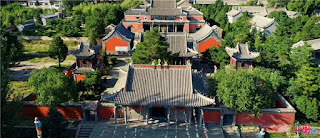
Visit the Kulun banner in northern China's Inner Mongolia. It is an ancient town with beautiful scenery, special cuisine, rich history, and nicely preserved culture and traditions.
21 October 2021
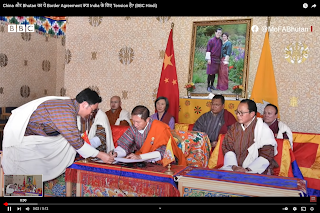
Bhutan and China agree on a border dispute.
गुरुवार 14 अक्टूबर को चीन और भूटान के विदेश मंत्रियों ने वीडियो कांफ्रेंसिंग के ज़रिए एक बैठक की और दोनों देशो के बीच कई वर्षों से चल रहे सीमा विवादों को सुलझाने के लिए एक थ्री-स्टेप रोडमैप के समझौते पर दस्तख़त किए. ये समझौता डोकलाम ट्राई-जंक्शन पर भारत और चीन की सेनाओं के बीच 73 दिनों तक चले गतिरोध के चार साल बाद हुआ है. डोकलाम में गतिरोध तब शुरू हुआ था जब चीन ने उस इलाक़े में एक ऐसी जगह सड़क बनाने की कोशिश की थी, जिस पर भूटान का दावा था. इस समझौते पर भारत के विदेश मंत्रालय के प्रवक्ता अरिंदम बागची ने कहा, "हमने आज भूटान और चीन के बीच समझौता ज्ञापन (एमओयू) पर हस्ताक्षर किए जाने को नोट किया है. आप जानते हैं कि भूटान और चीन 1984 से सीमा वार्ता कर रहे हैं. भारत भी इसी तरह चीन के साथ सीमा वार्ता कर रहा है."
https://www.youtube.com/watch?v=RyLU_KUVW00
10 October 2021

10 October 2021
China has again said it will "reunite Taiwan with the mainland," as tensions ramp up further between Beijing and the self-governing island.
President Xi Jinping told a Communist Party gathering that such a move would happen peacefully, and that China could never tolerate any form of separatism. Taiwan has responded by saying it is a sovereign nation, and that its people would decide their future. Taipei has been bristling over China's recent military incursions. DW News informs about the policy of China.
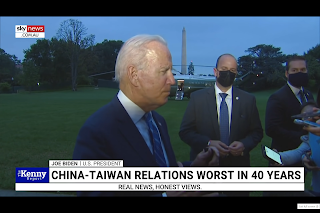
The Australian Strategic Policy Institute’s Michael Shoebridge says Chinese President Xi Jinping is “a man in a hurry” when it comes to his desire to unify Taiwan with the mainland by force.
This comes as almost 150 Chinese aircraft have entered Taiwan’s air defence zone since Friday.
“I think we’ve got to take it seriously because Xi does want to unify Taiwan with the mainland while he’s the leader,” he told Sky News host Chris Kenny.
“He’s a man in a hurry, and his only way to unify Taiwan now after what he’s done to Hong Kong is to do it by force. https://www.youtube.com/watch?v=TmsZNY-q5oo
Sky News Australia informs that China has an opportunity to seize Taiwan with Joe Biden as POTUS.
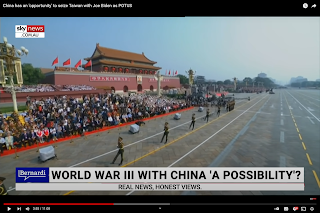
"Beijing knows that with Joe Biden in charge it has an "opportunity" to seize Taiwan, according to Sky News host Cory Bernardi.
"Preventing that from happening will depend on how seriously China takes the jawboning of the USA and their allies," Mr Bernardi said.
"And in the event that China did take Taiwan with little recourse, well that would have profound implications for our own security and safety."
It comes as Taiwan faces increased aggression from Beijing.
Mr Bernardi discussed the issue with the Australian Strategic Policy Institute's Michael Shoebridge".

Leh City Aerial view
23 February 2021
Canada's parliament declares China's treatment of Uighur as genocide.
https://twitter.com/BBCNews/status/1363998035454398464
https://twitter.com/UyghurCongress/status/1362696803225919489
8 January 2021
14 September 2020
Modi is repeating the same mistake that Nehru committed.
https://www.youtube.com/watch?v=_gfNWYe0Ez4
22 July 2020
If you want peace, prepare for war.
13 July 2020
The US is not a tiger – neither a real one nor a paper one. But it is an alpha wolf leading a so-called international coalition with wolf pack tactics. This is a threat to regional and global peace and stability: Chinese expert
3 July 2020
1. Nikkei Asian Review informs: Japan deepens intelligence sharing with India, Australia, and UK https://twitter.com/NAR/status/1278798742532038657
2. The US has at least 20 laws on national security while the UK has at least 3. Why can't China have one to safeguard #nationalsecurity on its own territory?
3. By shooting one-sided pictures, local and Western media again accused HK police of unlawful actions. In Hong Kong, none of the protesters died during the law enforcement action, while at least 13 died across the #US due to George Floyd protests. Who should be condemned?
2 July 2020
1. Global times informs that Tiktok company lost 6 billion dollars. The loss of Chinese internet company ByteDance – the mother company of Tik Tok — could be as high as $6 billion after the Indian government banned 59 Chinese apps, including Tik Tok, following deadly border clash between Indian and Chinese troops last month: source
2. Indian leaders understand how powerful China is, while Indian nationalists are ignorant and arrogant, “So they might say some harsh words, but they dare not take the first shot at us.” #ChinaIndiaFaceoff bit.ly/3hUQPhJ
3. The UK has seriously violated intl law and basic norms by offering HK BNO holders the right of abode. HK affairs are China's internal affairs, and no country has the right to interfere. China reserves the right to respond & the UK will bear all consequences: FM spokesperson
4. China warns UK as per DW reports: China warned the UK it could retaliate with "corresponding measures" following the UK's decision to extend a broader path to British citizenship for residents of Hong Kong.
1 July 2020
1. If your neighbor continuously snatches your land and rapes your family, how long can one tolerate it? What should be the limit? I remember one movie by Sunil Dutt and Nargis. Sunil Dutt takes a gun and forgets the rule of the land. United Nations have always failed to take action and clarify the boundary.

2. The Chinese government has deployed a mass sterilization campaign against Muslim ethnic minorities in the country's western provinces, according to a new report, which argues the tactics could amount to genocide.
29 June 2020
29.5 China is trying to control the east China sea and creating a war-like situation with the Philippines, Vietnam, Malaysia, Brunei.

29.4 A Russian spy unit paid members of the Taliban to conduct lethal attacks on U.S. troops in Afghanistan, according to a classified American intelligence assessment, people familiar with the report said
29.3 You will lose Tibet, SCS, Akshai chin, Area ceded by Pakistan, Hong Kong, and many other territories. Please don’t be under an illusion. Therefore it is in your interest to befriend India than the enemy. China has everything to lose and India none.
29.2 In today's world, where the customer is King, China is screwing up a relationship with one of the top markets in the World. Bullying and browbeating are things of the past centralized power control model. World over far and today, we live in partnering and cooperation. China might be overestimating
29.1 If #India wants to take advantage of US support in a border dispute with #China, it is terribly mistaken, as the Chinese PLA is fully prepared & capable of defending on multiple fronts, including the China-India border, South China Sea, and Taiwan Straits:analysts.bit.ly/2NDHFYU
Replying to
1. Enemy of Vietnam, Philippines, Brunei, Indonesia, Thailand, Singapore & Malaysia is China.
2. Enemy of Hong Kong, Taiwan & Tibet is China.
3. Enemy of US, Japan, Australia & India is China.
And China is an innocent peace-loving nation.

27 June 2020

"China has played its hand, and the fireworks have only just begun. Given our centralized way of functioning, the fuse has to be in Prime Minister Narendra Modi’s absolute control. He has to read the tea leaves carefully and take every decision far from the glare of publicity. Those advisors who have already failed him must go, and more competent people brought in. Just remember, in War, there is no place for the loser." Shiv Kunal Verma
26 June 2020
"As a result, while there are elaborate intelligence structures that could have anticipated China’s new aggression to change the status quo in Ladakh, none of them worked to prevent the crisis. This is a political failure. No government in independent India has ever wanted to plug the gaps and professionalize India’s intelligence community to ensure that national security objectives are served above political interests". Saikat Datta
23 June 2020
23.3 "On Hong Kong's security law, he said, Tibet was the first victim of the Chinese security law, and if India plans to resolve its border issue with China, Tibet should be resolved first." Lobsang Sangay:: For the last 60 years, we have been repeating this as a mantra, and it’s a fact that, if you look at the map of China, the Han Chinese populated territory is only 40% of the area, rest 60% include Tibet--which is one-fifth of Tibet, Xinjiang, Inner Mongolia, Manchuria and all that. If you look at the Chinese empire, it has expanded because of invasion and encroachment. After the occupation of Tibet in the 60s, Chinese leaders have said Tibet is the Palm, now they have to go for 5 fingers--Ladakh, Nepal, Bhutan, Sikkim, and Arunachal Pradesh. So in 2017, you have the Doklam incident that borders Sikkim and Bhutan, and then now you have in Ladakh. This is all part of the grand, long-term expansionist strategy which they had and implementing now. It has turned violent in a recent case in Ladakh." @Drlobsangsangay - From 23.2 below, Wion news
23.2 "The way Tibet was occupied. First, they said they will build a road from China to Tibet. This will bring prosperity to Tibetans. Once they build the road, they brought in trucks, tanks, guns, and soon they occupied us," says @Drlobsangsangay Listen https://twitter.com/sidhant/status/1275048642974343168 and https://www.wionews.com/india-news/tibetan-govt-in-exile-warns-of-chinese-expansionist-policy-in-the-region-says-beijing-buying-elites-in-nepal-307694
23.1 China and India must understand peace is more important than war.
Global times “We will never take one step back. We will never lose one inch of our territory.” On the ground with no boundary monuments, fearless Chinese border defense soldiers are the monuments."https://twitter.com/globaltimesnews/status/1275092094093111296
22 June 2020
"Things began to change soon after the birth of the People’s Republic in October 1949. A year later, the forcible occupation of Tibet by Chairman Mao’s red brigades was the first shot at the recreation of history. Tibet had always been an independent entity, but the assertive new rulers in Beijing (then Peking) claimed it had always been under Han overlordship.
The naked aggression in Ladakh in May-June 2020, and the subsequent killing of over 20 Indian soldiers, is a continuation of that story, with President Xi trying to further Chairman Mao’s expansionist agenda". Abhijeet Bhattacharya
21 June 2020
21.2
Japan news writes https://www.japantimes.co.jp/opinion/2020/06/08/commentary/world-commentary/indias-appeasement-policy-toward-china-unravels/#.Xu8mlWgzZyx
21.1 Strategy of China to control the world
Galwan fight details https://twitter.com/MODIfiedVikas/status/1274222556543807491
Chinese websites make more territorial claims
17 June 2020

17.1 Listen to this, and you will know
1-Why is there tension on the Indo-China border
2-Who all are working for China inside India /How does China throw money and buy their loyalties?
3-How China operates inside a rival economic superpower?
A must share genuine video Abt Chinese War Doctrine
17.2
17.3 Lawrence Sellin "China is a predator nation, which has intruded upon and illegally occupied internationally-recognized Indian territory. Then without provocation attacking Indian troops. The U.S. should support India, and India should have a seat on the UN Security Council."
16 June 2020
16.2 My Facebook informs events in detail. Chinese foreign ministry spokesman Zhao Lijian said Indian troops crossed the borderline twice on Monday, "provoking and attacking Chinese personnel, resulting in a serious physical confrontation between border forces on the two sides."
3 June 2020
Professor Explains History of China, Taiwan, and Hong Kong | The Great Courses Plus
What does China’s “One Country, Two Systems” policy mean? And how well did it work? If you’ve watched news coverage of public protests in Hong Kong, you’ll know “One Country, Two Systems” refers to how mainland China promised to govern Hong Kong after Great Britain gave up control there in 1997. It means communist oversight of a capitalist economy and culture. It also refers to China’s relationship with Taiwan.
In this lecture from 2010, “China’s Lost Territories: Taiwan, Hong Kong,” by Richard Baum for The Great Courses Plus, examine the reunification of Hong Kong with China in 1997 and the system that granted domestic autonomy to Hong Kong under Chinese sovereignty. Then track Taiwan's transition to democracy, the turbulent movements for and against independence from China, and Beijing's ongoing strategic efforts to reclaim the island.
1 June 2020
It's an established Chinese behavior to create a new crisis to push the previous one out of sight. But here are five things the world must do to stare China down.
27 May 2020
China has issued notice to its forces to be ready for war.

चीन ने लद्दाख की गलवान घाटी को बताया अपना, भारत को दी युद्ध की धमकी!
ताइवान, हांगकांग और जापान के बाद अब चीन ने भारत की तरफ कदम बढ़ाए हैं। लद्दाख की गलावन घाटी में उसने अपनी सेना को बढ़ा दिया है। यहीं नहीं चीन के सरकारी अखबार ग्लोबल टाइम्स ने इस इलाके को अपना बताते हुए युद्ध की धमकी तक दे डाली है। By daya krishan May 26, 2020 4:46 PM 9 hours ago
China choppers spotted near Ladakh. India is fighting a battle against viruses from China. China prints about Kyrgyzstan. Kyrgyzstan must be returned to China. It is taken by Russia. Kazakhstan belongs to China, as per the news.
Press in China is a tool in the hand of the government. CGTN informs that Mount Everest belongs to China and not to Nepal.
Chinese websites make more territorial claims.
China bans meat import from Australia.
Prime Minister of New Zealand supports Taiwan's participation at WHO. "Taiwan is a standout society," confirms Deputy Prime Minister of New Zealand and Foreign Minister.
China is committed to "Friendly and cooperative relations with other countries on the basis of mutual respect and equal treatment." It has nothing to do with economic coercion.
https://www.youtube.com/watch?v=NZWSfNLMuIs WION dated 13 May 2020.
After a face-off in Sikkim, Chinese choppers were spotted near the line of actual control close to Ladakh. Amid a pandemic, China is asserting its claim over different territories. But two countries are pushing back.

No comments:
Post a Comment
You are welcome to write your thinking